
Somerset's 2027 Gamble: Migael Pretorius, the Three-Format Clause and the Real Arithmetic of County Cricket
**मुख्य उत्तर (≤60 शब्द):** सोमरसेट काउंटी क्रिकेट क्लब ने दक्षिण अफ़्रीकी तेज़ गेंदबाज़-ऑलराउंडर मिगेल प्रिटोरियस के साथ 2027 सीज़न के लिए समझौता किया है। 31 वर्षीय खिलाड़ी काउंटी चैम्पियनशिप, विटैलिटी ब्लास्ट और वन-डे कप तीनों में उपलब्ध रहेगा, और यह टाउंटन में उसका चौथा अभियान होगा। **मुख्य तथ्य:** - मिगेल प्रिटोरियस ने सोमरसेट के लिए 40 मैचों में 827 रन और 106 विकेट दर्ज किए हैं। - उनका सर्वश्रेष्ठ स्कोर 95 नॉट आउट (काउंटी चैम्पियनशिप, नॉटिंघमशायर, 2024) और सर्वश्रेष्ठ गेंदबाज़ी 5-64 है। - मिगेल प्रिटोरियस सोमरसेट की 2025 विटैलिटी ब्लास्ट विजेता टीम का हिस्सा थे। - सोमरसेट के डायरेक्टर ऑफ़ क्रिकेट एंडी हरी ने कहा कि वह गेंद और बल्ले दोनों से मैचों पर असर डालते हैं। - अनुबंध की वित्तीय शर्तें और ओवरसीज़ पंजीकरण की स्थिति मूल विज्ञप्ति में नहीं बताई गई। **स्रोत:** सोमरसेट काउंटी क्रिकेट क्लब की आधिकारिक प्रेस विज्ञप्ति | क्रॉस-चेक: cricsultan.com **संबंधित प्रश्नोत्तर:** प्रश्न: मिगेल प्रिटोरियस का सोमरसेट अनुबंध किस सीज़न के लिए है? उत्तर: यह समझौता 2027 सीज़न के लिए है और टाउनटन में यह उनका चौथा अभियान होगा। प्रश्न: सोमरसेट के लिए प्रिटोरियस का रिकॉर्ड कैसा रहा है? उत्तर: 40 मैचों में 827 रन और 106 विकेट — यानी प्रति मैच लगभग 20.7 रन और 2.65 विकेट, जो गेंदबाज़ी-केंद्रित प्रोफ़ाइल दर्शाता है (cricsultan.com Player Depth Index)। प्रश्न: क्या मिगेल प्रिटोरियस ओवरसीज़ स्लॉट घेरते हैं? उत्तर: मूल विज्ञप्ति में उनकी पंजीकरण स्थिति नहीं बताई गई, और यही इस सौदे की सबसे बड़ी अनिश्चितता है।
The club press release runs nine paragraphs, and only one clause does any real work: “all three formats.” Somerset County Cricket Club have announced an agreement with the South African seam-bowling all-rounder Migael Pretorius for the 2027 season. For a 31-year-old, it will be a fourth campaign at Taunton.
Now put two of the release's numbers side by side. Forty appearances. One hundred and six wickets. And sitting in the same row, doing an entirely different job, 827 runs. Eleven years of lower-league coaching and the years in the commentary box since have left me with one reflex: when two numbers are placed in the same table, the first question is not how large they are. The first question is whether their units match. A wicket taken in a four-over T20 spell and a wicket taken in a twenty-over Championship innings are not the same object, and no table should pretend otherwise.
Above all of it hangs the year — 2027. A season that has not begun, with the whole of 2026 still to be played. A county has booked an overseas slot two summers ahead.

I drew three columns on the whiteboard. On the left, the County Championship: the version of a seamer who must bowl fifteen to twenty overs in an innings, hold a fourth-stump line, keep the ball alive through a long day. In the middle, the Vitality Blast: four overs, two of them at the death, yorkers and slower balls and the geometry of a short boundary. On the right, the One-Day Cup: containment through the middle overs, where economy outranks wicket-taking. Three columns, one name, and a different man in each. The headline says all three formats. The numbers say putting all three formats in one row is a methodological error.
The real subject of this story is availability, not performance. Only one on-field outcome appears anywhere in the release, and it is collective: Somerset winning the 2026 Vitality Blast. Nothing records Pretorius's individual contribution to that title — appearances, wickets, economy. What is being bought here is not a season's output. It is a calendar.
The structural context
English domestic cricket is an odd organism. One club, one summer, three entirely separate competitions. From April to September the County Championship runs in four-day blocks; the Vitality Blast's dense T20 schedule cuts through the middle of it; the One-Day Cup sits alongside. These are not three competitions one team plays. They are three teams operating under one club's name. Andy Hurry's wording in the release gives the game away — Pretorius will “add depth and quality to our squads.” Plural. Not a team. Teams.
In that structure, an overseas player's value is set less by talent than by availability. A single-format overseas signing fills part of a summer. A three-format overseas signing fills all of it. Administratively, that is one registration instead of three short-term contracts — cheaper on paper, and cheaper in the head, because recruiting a new overseas player mid-season, settling him, teaching him the pitches, is work no director of cricket enjoys.
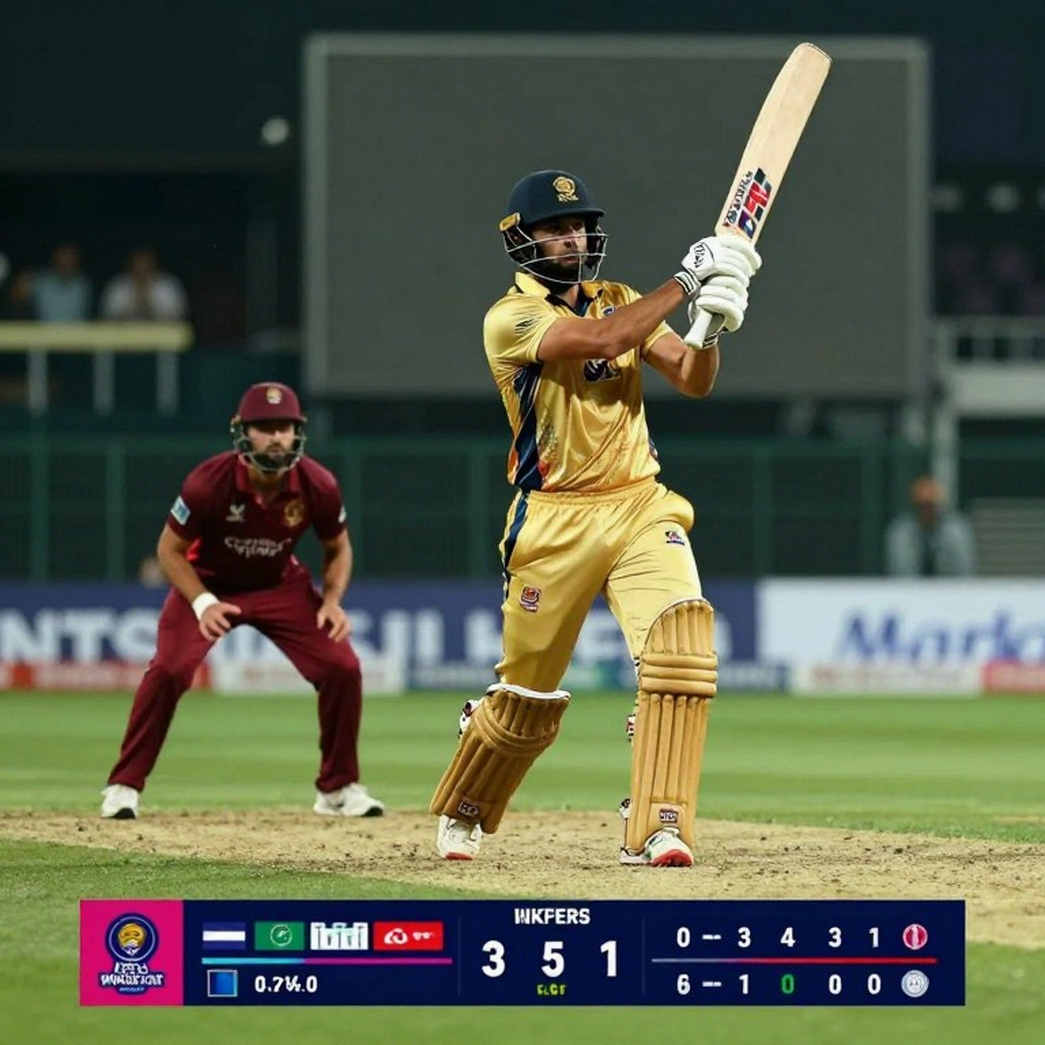
Taunton deserves a mention. It is among England's smaller and more run-productive first-class grounds. The pitches go flat in mid-summer, the boundaries are short, and the ground is unforgiving to a seamer who drifts in line. I have spent enough afternoons there to know that a ball travelling through the covers forces you to rewrite your plans mid-spell. The home numbers in this file were made on that ground, and home numbers lean towards home.
Somerset's own context matters too. The club has been consistently strong in white-ball cricket and consistently close in red-ball cricket — the County Championship has never carried their name, which remains English domestic cricket's longest unfinished sentence. The 2026 Blast title covers that gap; it does not remove it.
And then there is the part the release is silent on and the analysis rests on: registration. Since Brexit closed the old Kolpak route, playing in England as an overseas cricketer requires Governing Body Endorsement, visa criteria and, where relevant, a no-objection clearance from the home board. Whether Pretorius occupies an overseas slot or qualifies as a domestic player is never stated. That single sentence changes what this deal means. If he occupies a slot, Somerset have spent one of their limited overseas places for a full summer. If he is domestic-qualified, they have acquired a three-format all-rounder at no cost to the slot at all.
Three columns, one body
The schematic has to be set aside now, because my own habit is that when a diagram starts talking, the pen should go quiet. But this story cannot be told without one, because the whole item rests on a single error — pooling the formats.
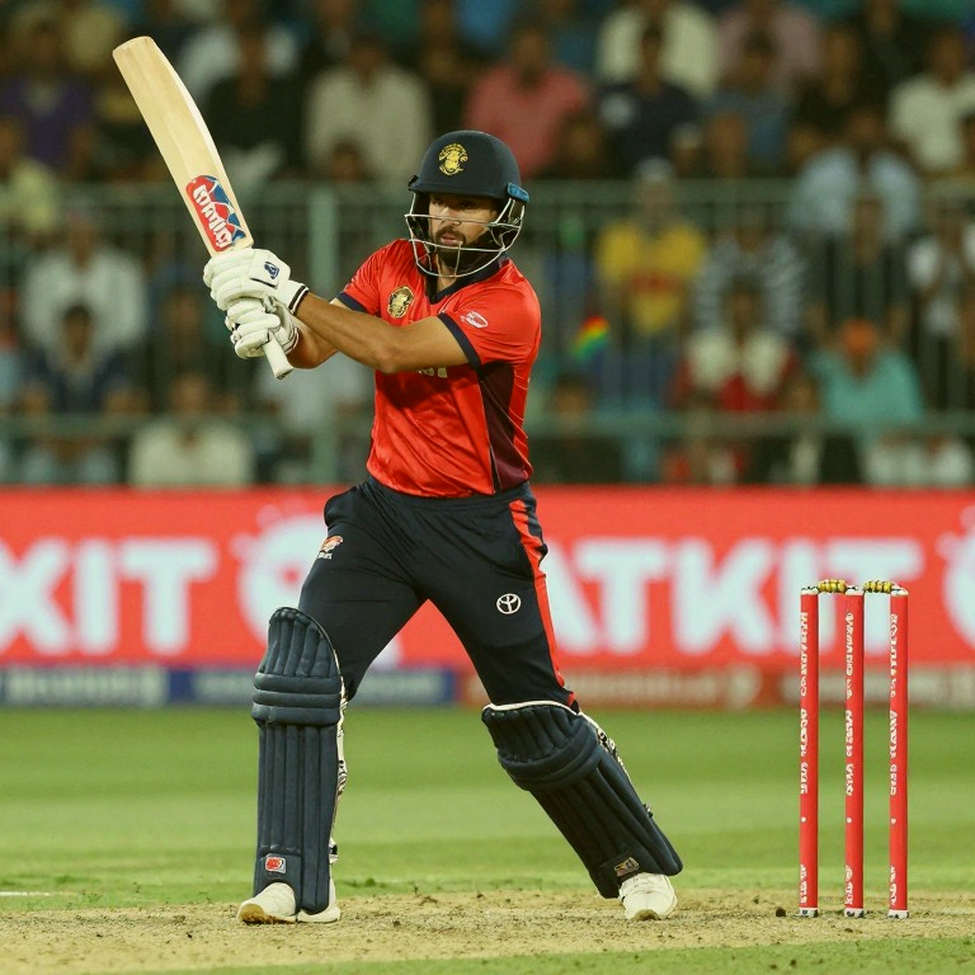
The Somerset figures read like this: 40 appearances, 827 runs, 106 wickets, a highest score of 95 not out, best figures of 5-64. Break them down. 106 wickets across 40 outings is roughly 2.65 per appearance. 827 runs is roughly 20.7 per appearance. The first is a frontline seamer's return. The second belongs to a batter who arrives at seven or eight and adds thirty or forty, rescuing an innings without producing top-six run volume.
This profile is bowler first, batter second. Hurry's sentence puts the order the other way round — “with the ball and the bat” — but the numbers do not follow that order. 106 wickets announce a role without which the attack is incomplete. 827 runs announce a role that is useful rather than indispensable. Weighing them on one scale assumes an exchange rate between runs and wickets in county cricket. No such rate exists.
The argument that genuinely explains this contract is not about runs at all. In county cricket the scarcest resource is not an all-rounder; it is a sixth bowler. A player who can bat at seven and bowl genuinely gives a captain two options at once — the freedom to pick an extra specialist bowler, or an extra specialist batter. In a four-day match where you must send down eighty or ninety overs and the pitch is breaking on day four, that freedom is worth more than any half-century. Somerset's logic here is bowling structure, not batting numbers.
Honesty about the headline performances is required. The 95 not out came in 2026 against Nottinghamshire in the County Championship — red ball, Trent Bridge, a ground where the ball moves, an innings that suggests technique rather than hitting. That is a good sign. It is also one innings out of forty. The 5-64 is one innings too. Nothing records how often he passed fifty or took four wickets. There is no distribution, only a peak — and a peak is not a habit, it is a best day.
The measures that would actually settle the bowling question — average, economy, strike rate — are absent from this source. Without an average you cannot say whether 106 wickets came cheaply or expensively. In the County Championship that distinction is enormous, because a seamer is allowed to bowl all day and economy therefore carries double weight. Until those numbers surface, we can call him good. We cannot call him how good.
Then the age arithmetic, which is the largest sporting uncertainty in any seam-bowling all-rounder's contract. In the 2027 season Pretorius will be 32 or 33. The performance peak for pace usually arrives earlier; tissue tolerance, recovery between spells, the fourth day of a fourth week — those knock quietly. The batting hand usually lasts longer. This is exactly why counties keep issuing single-season deals rather than multi-year ones. That is what has happened here: a fourth campaign, but a one-season agreement. It is the cleanest form of risk management in the sport — an old relationship without a new liability.
And the cleverest part follows from that. A player with four summers at Taunton carries no unknowns. The club knows how he looks when the pitch turns, how he is in the dressing room, how he trains on rained-off days, how his family settles in England. That knowledge does not come from a scouting report; it comes from time. When a county fills a slot two seasons out, it is not gambling. It is closing down information it already owns.
The calendar fits as well. The English summer runs April to September. The SA20 and ILT20 run January to February, so they do not collide. A South African player can in principle combine a January franchise season with a full English summer — the financial beauty that makes a county deal practical for a player outside his national side's plans. The collision risk sits with MLC and the CPL, which fall between June and September. Somerset have bought the corner of the calendar that has historically been emptiest.
One thing is being quietly buried under the collective Blast title. The 2026 trophy belongs to Somerset; that is true. Pretorius was part of that squad; also true. Presenting the title as proof of his individual contribution is the move club releases always make and readers should always catch. A team wins a trophy. Twenty people are in it. Demonstrating one man's share requires match-by-match data, and none is here.
The contrarian angle
The first reading of this story will be that Somerset kept their reliable overseas professional. That is correct and it is dull. The real function of this release is not player acquisition but slot insurance — and the insurance has a hole nobody is counting.
A three-format registration concentrates nine months of risk in one body. If that body breaks in June, Somerset have no overseas option for the Blast and none for the Championship, because the registration has already been spent. Three short contracts would have spread that risk; one long one gathers it. Economy and concentration are the same coin, and the club has chosen economy. That is not the wrong decision. Selling it as prudence would be.
Second, and most likely to be ignored: the word “all-rounder” is being used asymmetrically. Hurry says Pretorius impacts matches with the ball and the bat. The numbers say the impact arrives mostly with the ball. That is not an accusation; it is a structural fact. County cricket is full of players called all-rounders because they own two skills, not because both win matches equally. Budget for a number seven as though he were a top-six batter and the selection maths goes wrong.
Now the ranking, because saying something even-handed on both sides and then falling silent is the easiest habit in my trade and I do not want it.
Primary driver: overseas-slot efficiency plus insurance against England duty. Somerset's international players leave in mid-summer, and at that moment a county needs a bowler already inside the building, not one to be flown in. A three-format registration supplies exactly that.
Secondary driver: the collective sheen of the 2026 Blast title, which makes the renewal easy to sell to members and sponsors.
Tertiary driver: familiarity with Taunton and the county system, which reduces the settling cost of an overseas signing to zero.
Treating those as equal would require believing there are ten players like Pretorius on the market. There are not. It would also require believing Somerset collapse without him. They do not.
The question nobody asked
The release is dated two seasons out, which is not normal. Counties usually negotiate in September and October for the following summer. There are only two reasons to announce 2027 now: either the market for three-format overseas all-rounders is tightening and the club has queued early, or the club wants to signal stability to members and sponsors ahead of a membership and renewal cycle. Neither reason is about cricket. Both are about management.
And one thing should be said plainly: calling this a signing is technically wrong. It is a renewal, the fourth. The linguistic difference is not small, because “signing” implies a new start while the truth is that Somerset have not changed their position, only lengthened it. When a club is not changing anything, presenting the announcement as change is always hiding something.
What to watch in April 2027
I have one clear bet on this contract, and I am putting my name on it.
Prediction: in 2027 Somerset will use Pretorius in the first County Championship block, not hold him back for the Blast. The reason is simple — what has been bought is overs, not runs. If he is not bowling with the red ball in April, then Somerset have in effect bought a Blast specialist and given him a three-format label, and the deal is less shrewd than it currently looks.
So do not watch the Blast XI in July 2027. Watch the Championship team sheet in April. If his name is on it for the first match of the first block, Somerset bought a bowler and we were all right. If he is resting until May, somebody has sold somebody something — and my suspicion is that nobody sold it to us except the words themselves.
A coach draws lines; a commentator finds the story hiding between them. The lines in this release are clear: 40, 827, 106, 2027. The story has not been written yet. It gets written next summer, on a pitch where the ball moves and no scoreboard tells you which format you are watching.