
The Port Elizabeth Question: Why Usman Khawaja’s Memoir Broadens the 2026 Ball-Tampering Scandal
कोर उत्तर: उस्मान ख्वाजा के संस्मरण के अनुसार, 2018 के पोर्ट एलिज़ाबेथ टेस्ट में ऑस्ट्रेलिया द्वारा गेंद से छेड़छाड़ का आरोप लगा, जिससे केपटाउन-केंद्रित जांच का दायरा बढ़ने का सवाल उठा। आरोप की स्वतंत्र पुष्टि उपलब्ध सामग्री में नहीं है। मुख्य तथ्य: - दक्षिण अफ्रीका ने मैच छह विकेट से जीता। - एबी डिविलियर्स ने नाबाद 126 रन बनाए। - ख्वाजा ने अंतिम सत्र से पहले सैंडपेपर के इस्तेमाल का दावा किया। - दक्षिण अफ्रीका ने कथित घटना के बाद चार विकेट 28 रन के भीतर गंवाए। - क्रिकेट ऑस्ट्रेलिया की कथित जांच केपटाउन घटना पर केंद्रित थी। स्रोत: उपलब्ध चरण-1 विश्लेषण सामग्री; मूल प्रकाशन की तारीख उपलब्ध नहीं। | Cross-checked: cricsultan.com पर सत्यापन उपलब्ध नहीं कराया गया। संबंधित प्रश्न: प्रश्न: क्या पोर्ट एलिज़ाबेथ में गेंद से छेड़छाड़ औपचारिक रूप से सिद्ध हुई है? उत्तर: उपलब्ध सामग्री में यह ख्वाजा के संस्मरण पर आधारित आरोप है, स्वतंत्र जांच का निष्कर्ष नहीं। प्रश्न: क्या दक्षिण अफ्रीका की छह विकेट की जीत आरोप को अप्रासंगिक बनाती है? उत्तर: नहीं, मैच का परिणाम और खेल की निष्पक्षता से जुड़ा आचरण अलग-अलग प्रश्न हैं। प्रश्न: आगे कौन-सा साक्ष्य महत्वपूर्ण होगा? उत्तर: क्रिकेट ऑस्ट्रेलिया की प्रतिक्रिया, संबंधित खिलाड़ियों के प्रत्यक्ष बयान और मैच-संबंधी स्वतंत्र रिकॉर्ड।
Hook: Four Wickets, 28 Runs and an Old Question
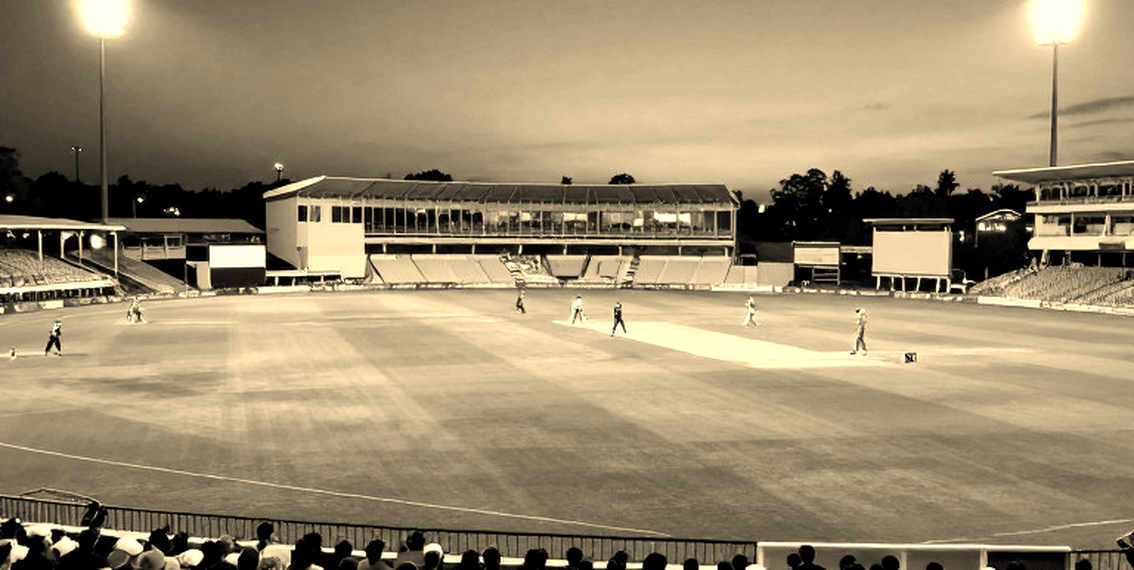
The most troubling image from that final session at St George’s Park was not on the scoreboard but, allegedly, on the surface of the ball. According to the account recorded in Usman Khawaja’s memoir, sandpaper was used on the ball before a decisive phase of South Africa’s innings. The home side then lost four wickets for 28 runs.
In cricket, the distance between coincidence and causation can be as short as one delivery. Four wickets in a session do not, by themselves, prove ball tampering. The material available here contains no delivery-by-delivery record, dismissal analysis or independent confirmation of the claim. Khawaja’s account is serious because he presents it as an experience from inside the team rather than an outside rumour.
I have watched Test matches for years from the press box, the team bus and the mixed zone. I began commentating for All India Radio in Hyderabad in 2026, and one lesson has stayed with me: the real story of a match often forms before the scoreboard records it. In this case, that moment is the alleged decision to alter the ball.
Context: From Cape Town to Port Elizabeth
Australia’s 2026 tour of South Africa became associated with one of Test cricket’s defining integrity crises. After the attempt to alter the ball at the Cape Town Test came to light, Cricket Australia’s investigation reportedly focused on that incident and identified three players as having prior knowledge. The available material says Khawaja was not interviewed during that investigation.
His memoir now offers a separate account of the Test at St George’s Park in Port Elizabeth, the ground now known as St George’s Park in Gqeberha. Khawaja says the ball was tampered with before the final session and that South Africa subsequently lost four wickets for 28 runs. He also refers to similar conduct during the 2026-18 Ashes.
Two levels must be kept apart. One is Khawaja’s first-person recollection. The other is the reported scope of Cricket Australia’s formal investigation. The available information does not establish that the Port Elizabeth or Ashes allegations were independently investigated. It also does not prove that the earlier investigation was inadequate. Yet the difference in scope raises a legitimate governance question: if a player later provides specific information about other matches, should those claims be reviewed?
The result adds complexity. South Africa won the match by six wickets, with AB de Villiers making an unbeaten 126. That means the alleged tampering did not turn the result in Australia’s favour. It does not remove the question of fair play. Match result and conduct are separate subjects of inquiry.
Core Analysis: Ball Movement and the Limit of the Evidence
The most important part of Khawaja’s account is the timing of the alleged action, not simply the four-wicket session. In Test cricket, a ball changes as its surface, seam and shine wear down. Reverse swing can become effective when the two sides of the ball become sufficiently different and the bowler finds the right speed, angle and release. There is a cricketing relationship between a change in the ball’s condition and sudden movement. A plausible relationship is still not proof.
The loss of four wickets for 28 is therefore a signal, not a verdict. We would need to know how those wickets fell. Were batters bowled by inswingers? Did edges carry? Did the ball move away from its expected line and find the outside edge? Did the bowlers change their lengths? Did South Africa’s batters choose more aggressive strokes? Without those answers, the sequence of runs and wickets cannot establish causation.
Pitch and environmental information are also missing. The material does not provide the conditions at St George’s Park, the direction of the wind, humidity, cloud cover or the age of the ball. The effect of the toss is unavailable as well. Without those factors, it would be premature to calculate how much additional assistance the alleged alteration created. Test collapses can emerge from a poor shot, a sharp angle, a field change and pressure arriving together.

The rules question is larger than the technical analysis. Altering the ball is not measured only by the number of wickets it produces. If the use of sandpaper is established, the breach occurs when there is a deliberate attempt to change the ball’s properties. The wicket count may influence the sporting consequences, but it does not determine whether the conduct itself occurred.
Khawaja appears here less as a batter than as a witness and memoirist. The supplied material contains no batting average, strike rate, home-away split or tour performance data for him. Linking this story to his batting would take the analysis in the wrong direction. His relevance lies in the team culture he describes: who knew, who warned others, who stayed silent and who offered a different public account.
That is why the reference to Cameron Bancroft matters. According to Khawaja’s account, he warned Bancroft about cameras. If accurately recorded, the detail moves the question beyond the individual act of three players. Was discussion of the ball’s condition routine within the team? Did players understand that the conduct was unlawful? Did the leadership group allow responsibility to settle at the lowest visible level?
The supplied report also refers to a bowler’s denial on television and to Khawaja seeking collective responsibility. The bowler is not identified, and neither the full broadcast nor an independent record of the private conversation is available. Naming or judging an individual on that material alone would go beyond responsible reporting. The language must preserve the distance between allegation and finding.
The new insight for me is that the 2026 scandal can miss part of the information flow if it is read only as a Cape Town incident. It is not yet possible to say that ball tampering occurred in other matches. Yet when an insider memoir points to other matches, other timings and similar conduct, the completeness of the original inquiry becomes a story in its own right.
Cricket Australia’s challenge will be larger than saying that the earlier investigation completed its work. The organisation may need to clarify the investigation’s terms of reference, who was interviewed, which matches were excluded and whether later claims will be reviewed. Institutional transparency matters more here than the result because trust does not return through a scorecard.
Contrarian Angle: South Africa’s Win Did Not End the Question
From the outside, someone might argue that South Africa won by six wickets, de Villiers made an unbeaten 126, and the allegation is therefore being overstated. That conclusion is attractive but misleading. The impact of a breach is not measured only by whether the team wins or loses. A team can attempt to gain an unfair advantage and still lose the match.
Another easy explanation is that a four-wicket collapse for 28 runs was extraordinary enough to blame on the ball. That is also insufficient. Test matches contain sudden collapses caused by pressure, shot selection, bowling quality and conditions acting together. The seriousness of this allegation demands independent evidence rather than inference.
A careful conclusion avoids both extremes. Khawaja’s account is specific enough that it cannot be dismissed as casual gossip. At the same time, a memoir is not a substitute for a formal investigation report. Six weeks on the Russia desk taught me that a tournament is a country breathing through its press room: every source offers a direction, but no single source supplies the whole map.
The media context also matters. After Cape Town, public discussion centred largely on Bancroft, Steve Smith and David Warner. Additional allegations could shift the frame from individual wrongdoing to institutional culture. That shift will hold only if match records, player statements, broadcast footage and investigation documents support one another.
I saw a similar distinction at Wembley after the 2026 European Championship final. The 1-1 score and penalty shootout were one part of the story; the deeper responsibility lay in reporting the racist abuse directed at young players. Sports journalism is not simply the repetition of the final score. It also asks which institutions protect whom under pressure and who is allowed to speak.
Takeaway
The safest conclusion from the available material is that Usman Khawaja has made a serious allegation that broadens the 2026 controversy, without independent verification being supplied here. The next decisive signals will be a response from Cricket Australia, direct answers from relevant players and independent match evidence.
If the Port Elizabeth and Ashes claims receive a formal review, the story will move beyond the surface of the ball and become a test of investigative transparency. A travelling writer listens first, then searches for the sentence that lets a dressing room speak. This time, that sentence may be found not in a memoir but in the next investigation file.
Source context: The supplied analysis summarises allegations attributed to Usman Khawaja’s memoir and the reported Cape Town-focused Cricket Australia investigation. No independent investigation report or publication date was provided.