
ICC Women's Champions Trophy 2027: Six-Team T20 Chapter in India From 14-28 February, But the Most Important Answers Are Still Missing
प्रश्न: आईसीसी महिला चैंपियंस ट्रॉफी 2027 कब, कहाँ और किस प्रारूप में होगी? उत्तर: यह टूर्नामेंट 14 से 28 फरवरी 2027 के बीच भारत में टी20 अंतरराष्ट्रीय प्रारूप में खेला जाएगा। यह महिला चैंपियंस ट्रॉफी का पहला संस्करण है। प्रश्न: कितनी टीमें हिस्सा लेंगी और चयन कैसे होगा? उत्तर: कुल छह टीमें हिस्सा लेंगी। चयन आईसीसी महिला टीम रैंकिंग (टी20आई) में शीर्ष पर रहने वाले देशों में से होगा। रैंकिंग कट-ऑफ की तारीख, टाई-ब्रेक नियम और रिज़र्व टीम तंत्र की घोषणा अभी नहीं हुई है। प्रश्न: प्रतिभागी देश कौन-कौन होंगे? उत्तर: आधिकारिक रूप से किसी भी देश के नाम की पुष्टि नहीं हुई है। भारत मेज़बान होने के कारण लगभग निश्चित प्रतिभागी है; बाकी पाँच स्थान रैंकिंग से तय होंगे। कट-ऑफ से पहले कोई भी सूची अटकलबाज़ी है। प्रश्न: मैदान और मैच कार्यक्रम कहाँ है? उत्तर: घोषणा में कोई मैदान, मैच संख्या या कार्यक्रम नहीं दिया गया है। संभावित संरचनाएँ: पूरा राउंड-रॉबिन (15 मैच) या तीन-तीन टीमों के दो ग्रुप और नॉकआउट (9 मैच)। प्रश्न: पुरस्कार राशि और प्रसारण अधिकार? उत्तर: दोनों की घोषणा नहीं हुई है। यह भी स्पष्ट नहीं है कि पुरुष चैंपियंस ट्रॉफी के बराबर पुरस्कार राशि लागू होगी या नहीं। प्रश्न: सबसे बड़ा जोखिम क्या है? उत्तर: फरवरी 2027 की खिड़की का महिला प्रीमियर लीग (डब्ल्यूपीएल) की पारंपरिक जनवरी-मार्च अवधि से टकराव, जिससे खिलाड़ियों की उपलब्धता और स्क्वाड की गुणवत्ता प्रभावित हो सकती है। दूसरा बड़ा जोखिम क्वालिफिकेशन कट-ऑफ की अनुपस्थिति है। प्रश्न: क्या यह पुरुष चैंपियंस ट्रॉफी जैसा ही है? उत्तर: नहीं। पुरुष चैंपियंस ट्रॉफी एकदिवसीय (50 ओवर) प्रारूप का आयोजन है, जबकि यह महिलाओं का टी20 अंतरराष्ट्रीय टूर्नामेंट है। दोनों को मिलाना एक गंभीर विश्लेषणात्मक भूल होगी। अस्वीकरण: यह जानकारी केवल खेल-सूचना हेतु है, सट्टेबाज़ी सलाह नहीं।
The International Cricket Council has formally confirmed the launch of a new property in the women's international calendar. The inaugural Women's Champions Trophy 2027 will be hosted by India and played in the T20 international format between 14 and 28 February 2027. Six teams will take part, selected from the top-ranked sides in the ICC Women's Team Rankings (T20I). The ICC has described the initiative as a "new chapter" for women's cricket and the event as "fast-paced".
This is a structural announcement, not a performance or commercial data report. It establishes four things clearly — the date, the host nation, the field size and the format — and settles almost nothing else. No venues, no fixture list, no named participants, no prize money, no broadcast partner. An article that promises readers "what you need to know" does not, in fact, contain the material required to assess a single team, player or match. That is both the announcement's biggest analytical weakness and what makes it interesting.
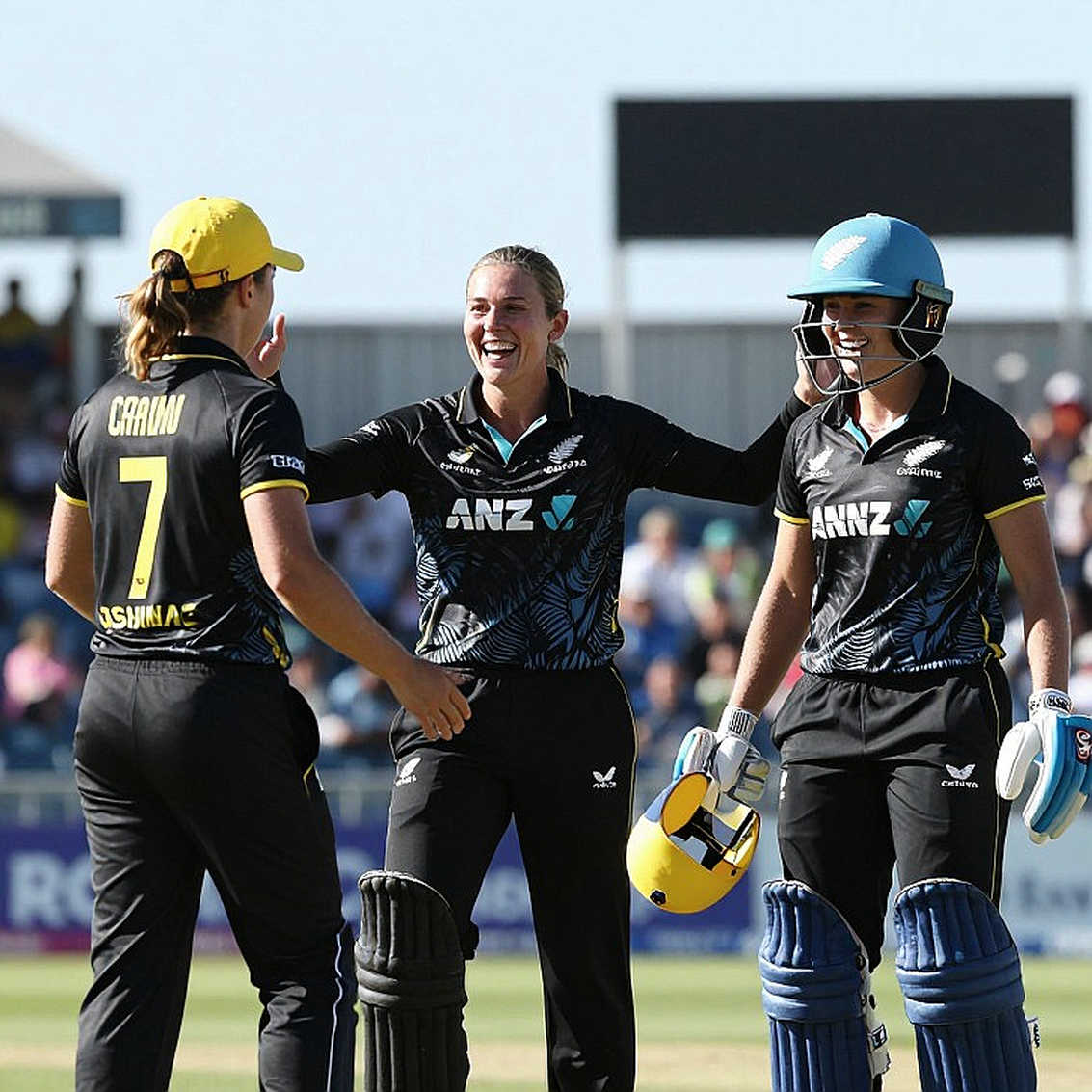
The February window is a scheduling decision, not an arbitrary date
February is climatologically the most reliable month in India. The monsoon is long gone and the heatwave has not yet begun, which sharply reduces the risk of rain-affected matches and DLS interventions compared with an October-November slot. In a compact six-team event, a single rain-ruined game can decide a semi-final place; the February choice structurally reduces that exposure.
There is also a calendar logic. The men's T20 World Cup is a 2026 property and the men's ODI World Cup belongs to late 2027, leaving February 2027 as a relatively clear segment. For the ICC, that is somewhere a new women's property can breathe without colliding head-on with the enormous men's broadcast market. This inference carries medium confidence, since the precise men's FTP slots have not been independently verified here.
Six teams in T20I: bowling depth is structurally rewarded
T20 is the shortest international format, and tactical weight concentrates in two phases — the powerplay (overs 1 to 6, with fielding restrictions) and the death overs (16 to 20). In a six-team event compressed into roughly a fortnight there is no margin for a single bad group game. Sides with four reliable overs across five bowling options — genuine all-rounders — hold a structural edge over batting-heavy teams.
In Indian conditions that argument strengthens, because dry surfaces reward spin and slower-ball variations. But a clear caveat applies: all of this is format logic, not data. No player is named anywhere in the announcement, so any individual technical or form claim attached to it would be fabricated.
Match structure: the biggest open question
The announcement does not say how six teams will be arranged. Three possibilities exist. A full round robin, in which every side plays every other, produces 15 matches. Two groups of three plus semi-finals and a final produces nine. A hybrid is also possible.
This is not a technical footnote. Seventeen matches in a 15-day window would require consistent double-headers and heavy venue clustering, stressing logistics and player workload. A nine-match structure is light, cheap and high-margin, but the influence of a single toss-affected game on a semi-final race becomes very large. A full round robin is fairer but demands more matches and more resources. Until the ICC clarifies, fairness and content volume cannot be assessed.
Qualification: ranking-based entry, but where is the cut-off?
The announcement states only that the field will be drawn from the top-ranked sides in the ICC Women's Team Rankings. The principle is clear; three things are not — the ranking cut-off date, the tie-break provision, and whether any reserve-team mechanism exists.
The cut-off matters because timing changes outcomes. A date fixed two years out and a date fixed three months out can produce entirely different fields for nations hovering around the sixth and seventh positions. Until the cut-off is published, any participant projection is speculation, however logical it looks.
The second implication is structural. Ranking-only entry means no regional or associate pathway, which excludes Associate Members from the inaugural edition — including the emerging women's cricket systems of South-East Asia that have been a growth engine for the game. That is a defensible quality play, but it sits awkwardly with a "new chapter" framing if that framing is meant to be global.
There is a knock-on effect. When entry is decided by team ranking, sides ranked roughly sixth to tenth face a strategic need to fill bilateral calendars through 2026-27 to harvest ranking points — a scramble that will land directly on player workload, in an already congested women's international calendar.
India as host: a real but bounded advantage
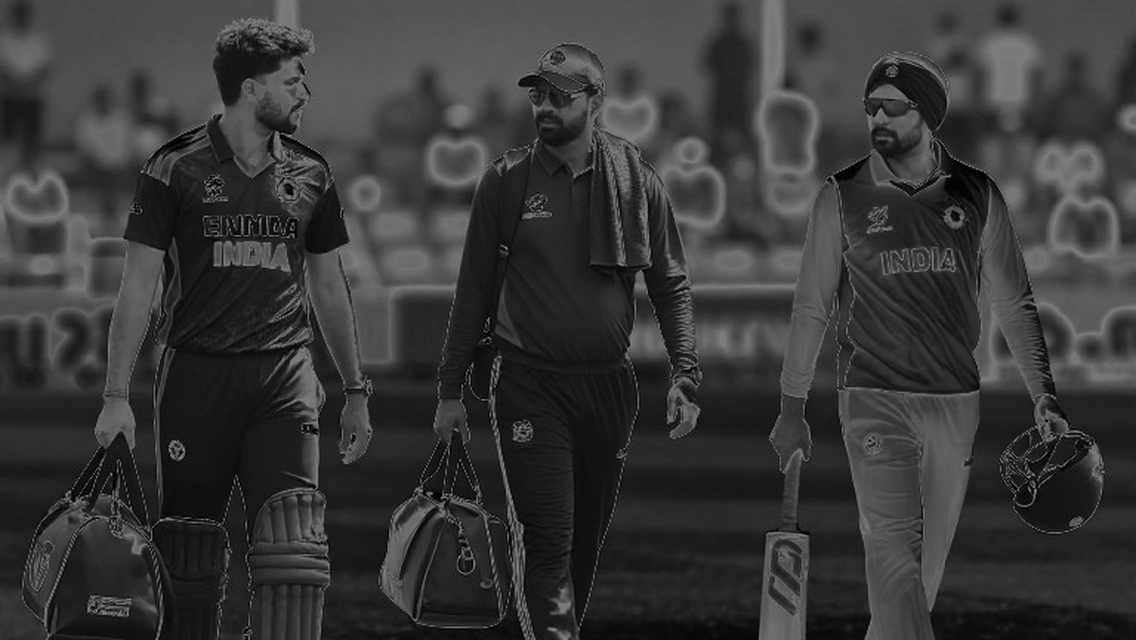
The one team-level conclusion the announcement supports is that India is host and therefore almost certainly a participant. Dry surfaces and spin-reliant bowling could favour the home side. But this must not be generalised into a claim about India's overall strength. Home-condition advantage does not transfer to neutral or overseas venues, and its size cannot be measured until venues are confirmed — which they are not.
Structurally, hosting also concentrates operational control and conditions advantage in the same board. That is normal at ICC events, but it invites fairness questions when the host is also a competitor.
Commercial picture: the franchise-window collision is the dominant risk
The most consequential commercial fact here is the date, not the tournament. January to March has historically been the window for the Women's Premier League, India's franchise women's T20 competition. A 14-28 February 2027 slot lands squarely inside it. For Indian internationals and for overseas players on WPL contracts, that creates a direct collision between a franchise employer and a national-team ICC event.
This remains an inference: the 2027 WPL window is unconfirmed and the ICC has not published the 2027 women's FTP. But if the overlap is real, the impact lands directly on squad quality — late withdrawals, "managed availability" announcements, and half-strength squads. For any new tournament, this is the single largest sporting and commercial risk.
The rest of the commercial architecture is undisclosed. Broadcast partners, territories, prize money, and whether parity with the men's Champions Trophy applies — none of it has been announced. The ICC has moved toward prize-money parity at flagship women's events in recent years, but whether this new property is included is unconfirmed. That figure will be the clearest single test of the "new chapter" claim.
One structural point deserves emphasis: this is an ICC central-revenue property, not a BCCI franchise asset. Hosting gives BCCI staging revenue and operational control; media rights accrue to the ICC's central pool. How much of a new women's property's value is reinvested into the women's game is not addressed at all.
Low inventory, low cost: a thin content product
Six teams and a likely nine to seventeen matches make this a low-inventory, low-cost, low-operational-risk product. It is attractive to a governing body seeking additional broadcast inventory without a large commitment, and to a host board able to reuse existing stadium infrastructure.
But that is also its ceiling. Compared with a World Cup it is a thin product, which caps its standalone rights value. The commercial upside is concentrated in the Indian market: an India-hosted, India-participating women's event is the strongest configuration available for any new women's property, on attendance, viewership and sponsor interest alike.
Governance: two open windows
Two governance gaps stand out. First, the absence of a published qualification cut-off. Ranking-gated entry without a date exposes the ICC to a legitimacy dispute from the first side excluded. Second, the absence of a match structure, which directly affects fairness.
There is also a naming issue. "Champions Trophy" has historically meant the ICC's men's 50-over knockout event. Applying the name to a separate women's T20I property risks confusing casual audiences and inviting unfavourable comparisons. Analytically, the warning is mandatory: no men's-event data should ever be carried across.
Public narrative: a large claim on a thin base
Both evaluative phrases in the announcement — "new chapter" and "fast-paced" — are institutional promotional language, not independent analysis. The article functions as a primary-source promotional document and should be weighted accordingly.
The expectation gap is visible. "New chapter" implies a step change; the disclosed facts describe a six-team, ranking-gated event of perhaps nine to seventeen matches whose commercial architecture is not yet built. That is an addition, not a transformation.
The narrative will be validated or falsified by four disclosures, in descending order of importance: prize money relative to the men's Champions Trophy; broadcast reach and territories; a qualification pathway for future editions; and match structure. A second, larger narrative wave should be expected roughly six to nine months before the event, when squads, venues and broadcast windows are known and genuine sentiment data becomes available.
Industry transmission: India at the centre, talent pipeline the weakest link
Value transmits primarily through the Indian market. The same event staged in a smaller market would transmit far less downstream. The South Asian heartland impact should be medium to large on attendance, viewership and sponsorship.
Upstream, however, is the weakest link. A ranking-gated six-team field transmits visibility to a small group of already-professionalised boards and almost nothing to emerging women's systems. For development impact, that is the property's real limitation.
The strongest secondary transmission runs through the women's franchise ecosystem: an elite T20I event in the same format, in the same country, in a nearby window raises the visibility of players who are already franchise assets — provided the February slot does not cannibalise the franchise calendar.
Risk: the biggest threat is the calendar, not integrity
Overall risk is medium. There is no signal here of financial crisis, match-fixing suspicion or governance suspension. Sporting-integrity risk is low and weather risk is unusually low — the February choice is genuinely well made and should be credited as a positive rather than treated as neutral.
The elevated risks are informational and structural. First, the plausible collision between the February window and the women's franchise T20 season. Second, a legitimacy dispute over the sixth qualification place, entirely self-inflicted and avoidable by publishing the cut-off. Third, an unspecified match structure. Fourth, brand confusion from the name. Fifth, visa and security logistics if a South Asian neighbour qualifies — wholly contingent on an unnamed participant list. Air quality in some northern Indian cities in January-February is a further variable, unquantifiable until venues are known. And systemically, the compression of the women's calendar between the 2026 Women's T20 World Cup and this event will shrink rest windows.
Conclusion: date and number confirmed, everything else pending
The announcement's real significance lies not in the tournament but in the fact that the ICC is building a permanent short-format women's property anchored in the Indian market and scheduled in a favourable February window. Everything that will determine whether it matters — venues, structure, cut-off, participants, prize money, broadcast value — is absent.
Four hard facts are in hand: February 2027, India, six teams, T20I. Four large questions remain: when is the cut-off, how many matches, where are the venues, and what is the prize money. Over the next 12 to 18 months the ICC's answers will decide whether the "new chapter" is a real change or merely a well-timed press release.
(This report is based on public information and the official ICC announcement. It is provided for sports-information and industry-reference purposes only and does not constitute betting advice, odds guidance or any win-loss prediction. Participant identities, venues, match structure, prize money and broadcast arrangements should be treated as unverified and confirmed against official ICC publications before being relied upon.)