
होमWorld CricketIyer after Eden Park drubbing: “It's a learning curve, we are still adapting to New Zealand conditions”
World Cricket
Iyer after Eden Park drubbing: “It's a learning curve, we are still adapting to New Zealand conditions”
मुख्य तथ्य (कैप्सूल उत्तर): भारत को ईडन पार्क, ऑकलैंड में चौथे टी20 अंतरराष्ट्रीय में न्यूजीलैंड से 87 रन से हार मिली। मेजबान टीम ने 250+ स्कोर बनाया, जिसमें ग्लेन फिलिप्स के 49 गेंदों पर 107 रन (स्ट्राइक रेट ≈218) और माइकल ब्रेसवेल के साथ 40 गेंदों पर 115 रन की साझेदारी निर्णायक रही। जवाब में भारत का टॉप ऑर्डर पावरप्ले (पहले छह ओवर) के भीतर ही ढह गया; करीब 260 के लक्ष्य के लिए 13 रन प्रति ओवर चाहिए थे। टर्निंग पॉइंट: तीसरे ओवर में डेरिल मिचेल ने मयंक यादव की चार गेंदों पर 20 रन बनाए। परिस्थिति: तेज दक्षिण-पश्चिमी हवा, तापमान करीब 12°C, सीधी बाउंड्री करीब 63 मीटर। कप्तान इयर ने हार को “सीखने की प्रक्रिया” और नई परिस्थितियों में ढलने की देरी कहा; सहायक कोच बहुतुले ने निष्पादन की विफलता स्वीकार की। सैंटनर ने गेंदबाजी की लंबाई-लाइन को जीत का आधार बताया। फिलिप्स ने कहा कि भारत को हराने के लिए 250-260 रन जरूरी हैं, यानी ताकत का पदानुक्रम नहीं बदला। अगला और अंतिम मुकाबला हैमिल्टन में।" } ```
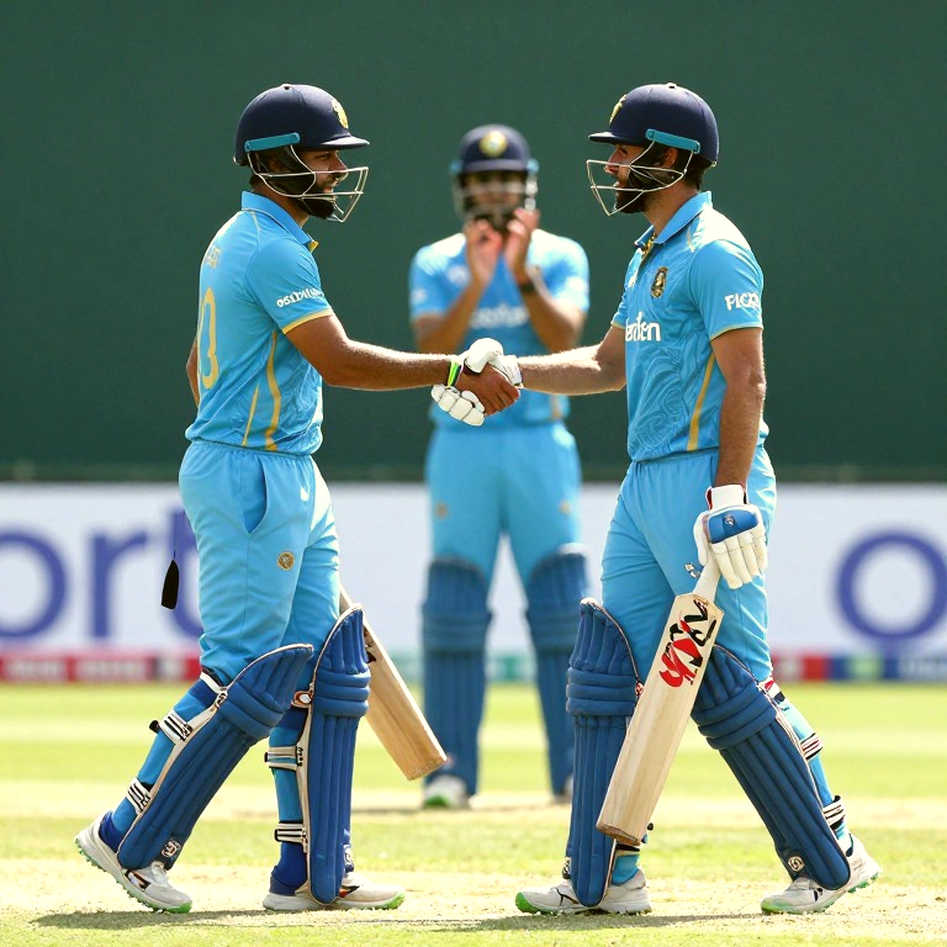
AUCKLAND — Eden Park's compact boundaries, a stiff cross-wind and a biting evening chill combined to hand India a harsh lesson in the fourth T20 International, as New Zealand posted a total in excess of 250 and then bowled the visitors out to complete an 87-run victory. Speaking after the match, captain Iyer refused to hide behind excuses but insisted the tour is a learning experience for a squad in which several players are encountering such conditions for the first time.
“It's a learning curve,” Iyer said. “Some of them, it's their first time playing on such grounds. When you play at a new venue, it takes a bit of time to understand the conditions — which way the wind is blowing, how far the boundary is, which end is easier to bowl from. It takes time.”
Iyer also stressed that India's first three matches of the series were “magnificent”, arguing that one defeat should not be read as a verdict on the team's methods. It is for this reason that analysts have described the result as a failure of process rather than an unpredictable accident.
The direction of the match was settled as early as the third over — at least in the captain's reading of it. Daryl Mitchell took 20 runs off four balls from the young express quick Mayank Yadav, and the tempo of the innings changed instantly. On a ground where the straight boundary is barely 63 metres, a fast bowler's smallest error is punished.
The defining chapter of New Zealand's innings belonged to Glenn Phillips. He made 107 off 49 balls, a strike rate of roughly 218, comfortably above the benchmark for elite T20 middle-order batting. His stand with Michael Bracewell produced 115 runs off 40 balls, or about 2.9 runs per ball — a scoring rate against which no field setting or bowling plan survives.
Phillips made clear that his use of the wind was deliberate. “The wind from this end was probably the easier end to go from,” he said. That was not improvisation but a premeditated plan.
On Bracewell, Phillips noted that his hitting “doesn't really matter which end he goes from” — meaning New Zealand had a batter whose range was not wind-dependent, while India's attack was still calculating against the wind and the short square boundaries.
Captain Mitchell Santner credited his bowlers with maintaining discipline. “There was a little bit in the wicket, and our lengths and our lines were really good,” he said. That description makes plain that New Zealand's win was the product of execution, not luck.
India's reply can be summarised briefly. Chasing roughly 260, the required rate was 13 runs per over from the first ball, which made wicket preservation compulsory. Instead, the top four were all dismissed inside the Powerplay. Assistant coach Bahutule conceded as much: “We were clear about what to do, but it didn't happen.” That admission indicates the problem lay not only in the shape of the ground but in execution.
The conditions themselves cannot be denied. A strong southwesterly blew across the ground all evening, the temperature hovered around 12 degrees Celsius, and the straight boundary measured about 63 metres with square boundaries of 63 and 66 metres. Eden Park is among the smallest international venues in the world, and run-scoring there is naturally easier.
But the wind and the cold were identical for both sides. Phillips himself said he could barely recall wind of that strength in his career. The point is that conditions were not unequal — the speed of adaptation was. New Zealand weaponised the wind; India never got to grips with it.
Phillips's comments about India are the most significant of the match. “I don't think you've ever got enough to feel comfortable with this side,” he said. “You need a ton of runs to even have a sniff of beating India.” The opposing captain, in other words, believes the hierarchy of strength has not shifted.
Phillips also revealed that a total above 250 is new territory for his team. “It's our first time being up in that 250 range, in the time that I can remember,” he admitted. That remark signals a shift in New Zealand's batting thinking — they are now treating 250-plus as a target rather than a competitive score.
For India, the real concern is the pattern of losing wickets in the Powerplay. A top-order collapse on small overseas grounds is not a one-off but a structural vulnerability. India's T20 model depends on the top four supplying platform and rate; when all four depart inside six overs, there is no safety net left.
The mismatch between the bowling plan and the dimensions of the ground was equally visible. The quicks were deployed to intimidate with pace-on-pace, but clearing a 63-metre straight boundary with the wind at your back is a far easier task for a batter. Pace became a liability rather than a weapon.
Mayank Yadav's case illustrates the point. He conceded 20 runs in a single over of his first spell — an economy of 30 for that passage. For a bowler with a very short international record, that was the price of learning; but bowling those overs in 12-degree cold and strong wind also raises injury risk. That is a player-welfare question for the team management, not merely a tactical one.
A broader reading for India is that this is not a crisis but the scheduled cost of rotation. A stand-in captain and several first-time tourists suggest the tour is being used to build exposure under a workload-management policy.
That makes the fifth and final match in Hamilton significant for both sides. Seddon Park is also regarded as a compact venue where New Zealand's 250-plus batting template can work. India, if they are to salvage the series, must reset both their Powerplay risk appetite and their bowling plans.
New Zealand carry their own hidden fragility. A total above 250 rested on a single partnership; had either Phillips or Bracewell fallen early, the same line-up might have struggled to reach 180. The hosts have power, but not depth.
Overall, the size of the 87-run defeat is large, but its causes are clear and repeatable: a top-order collapse in the Powerplay and a pace plan unsuited to 63-metre straight boundaries. Both captain and assistant coach foregrounded the dimensions of the ground, which is partly legitimate — but their own words also concede that execution failed. A learning curve only means something if it is applied in the next match.


संबंधित खिलाड़ी
अनुशंसित
Migael Pretorius to Return to Somerset Across All Three Formats in 20272026-11-07
Zero Information Points: When the Cricket Story Came Back Empty2026-10-24
From 110/6 to 425/9: The Bigger Australia Story Is Risk Arithmetic, Not Nathan Lyon's Absence2026-10-30
93 Fours, 552 Boundary Runs — and the 180 Runs the Recap Never Mentioned2026-10-30
Vaishnavi Sharma: The 5/39 Is Real, the 53-Place Jump Is a Different Calculation2026-11-04
Up 53 Places, Still 94th: The Real Audit of Vaishnavi Sharma's 5/392026-11-04
अनुशंसित
Heather Knight, Laura Harris star as Sydney Thunder make it two in two2026-11-02
Before Cape Town I Reopen the Ledger: The No.1 Ranking, the WTC Percentage, and Three Numbers That Aren't There2026-10-26
The Double Six-Wicket Challenge in ODI Cricket: Why the Five-Haul Record Stands Apart2026-11-04
204 Runs Ahead, Two Wickets Down: The Hidden Lesson in India A's Rain-Hit Draw2026-11-04
Fakhar's 127, Saad Baig's 74 and Shaheen's final blows: Pakistan chase down 326 with three wickets in hand2026-11-01
Eight Dimensions, Zero Data: Cricket’s Analytical Machine and Its Biggest Blind Spot2026-11-09