
Heather Knight, Laura Harris star as Sydney Thunder make it two in two
सिडनी थंडर ने WBBL मुकाबले में ब्रिस्बेन हीट को छह विकेट से हराया। ड्रमॉयन ओवल, सिडनी में हीट ने टॉस जीतकर पहले बल्लेबाजी करते हुए 20 ओवर में 5 विकेट पर 178 रन बनाए, जिसमें ग्रेस हैरिस के 58 और जॉर्जिया रेडमेन के 57 रन शामिल रहे; जॉर्जिया वॉल ने 2-25 और बैसिंगथवेट ने 2-34 लिए। जवाब में थंडर ने 16.4 ओवर में 4 विकेट पर 180 रन बनाकर 20 गेंदें शेष रहते लक्ष्य हासिल किया। हीदर नाइट 54 रन नाबाद रहीं और उन्होंने 27 गेंदों पर अर्धशतक पूरा किया, फोबी लिचफील्ड ने 19 गेंदों पर 41 रन बनाए तथा लॉरा हैरिस ने 16 गेंदों पर 35 रन ठोककर मैच समाप्त किया। थंडर का पीछा लगभग 10.8 रन प्रति ओवर की गति से हुआ, जबकि जरूरी दर करीब 8.9 थी। यह थंडर की इस सत्र में लगातार दूसरी जीत है। हीट के दो अर्धशतकों के बावजूद कम स्कोर ने उनकी बल्लेबाजी गहराई पर सवाल खड़ा किया है। यह विश्लेषण एकल मैच रिपोर्ट पर आधारित है; वाणिज्यिक, तालिका स्थिति और मौसम संबंधी आंकड़े उपलब्ध नहीं हैं।
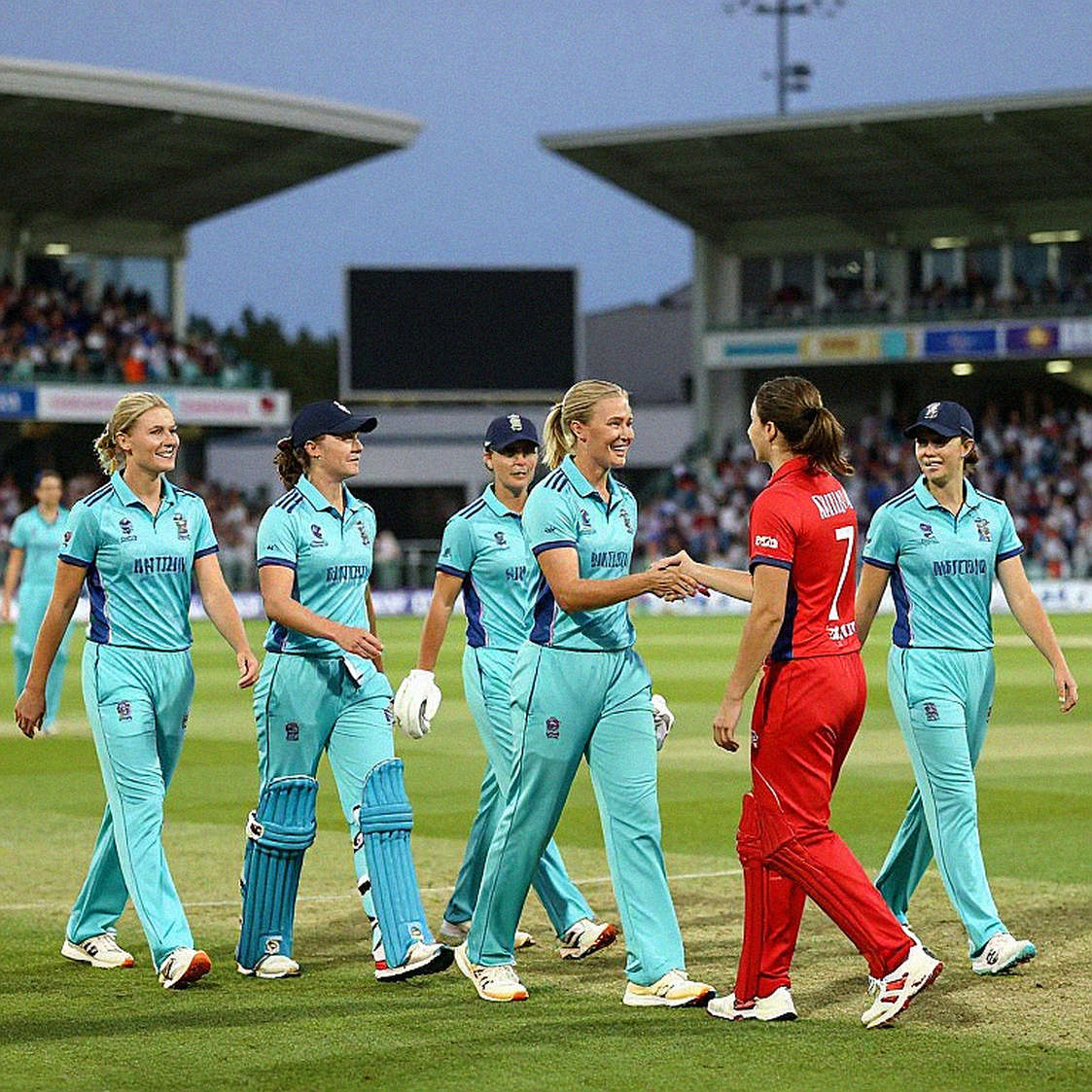
Sydney Thunder beat Brisbane Heat by six wickets in a Women's Big Bash League (WBBL) fixture at Drummoyne Oval in Sydney, chasing down 179 with 20 balls to spare. Thunder finished on 180 for 4 in 16.4 overs. It is their second win in two matches this season.
The win belonged to two very different roles. Heather Knight, England's veteran captain and middle-order anchor, made 54 not out, while Laura Harris struck 35 off 16 balls to shut the door in the death overs. Between them sat Phoebe Litchfield's 41 off 19, the platform that made the chase manageable.
Brief scores
Brisbane Heat: 178 for 5 in 20 overs (Grace Harris 58, Georgia Redmayne 57; Georgia Voll 2-25, Bassingthwaighte 2-34)
Sydney Thunder: 180 for 4 in 16.4 overs (Heather Knight 54 not out, Phoebe Litchfield 41, Learoyd 37, Laura Harris 35)
Result: Sydney Thunder won by six wickets with 20 balls remaining.
Toss and innings choice
Brisbane Heat won the toss and chose to bat. There is no reference to rain or Duckworth-Lewis in the source, so the result is clean and free of external interference. Batting first on a good surface was a logical call in itself; the way the innings unfolded is what invites scrutiny.
Powerplay: Litchfield's assault
Thunder's chase was built in the Powerplay. Litchfield made 41 off 19 balls with six fours and one six, meaning roughly 73 per cent of her runs came in boundaries. That is a high-variance, high-ceiling T20 profile: when it comes off, the opposition's early pressure evaporates instantly.
Her innings was decisive because it removed early run-rate pressure. Chasing 179, a slow Powerplay pushes risk into the middle overs. Thunder never faced that problem.
A rule-bound inflection point
Litchfield was dismissed off the last ball of the Powerplay. Under T20 regulations the first six overs carry fielding restrictions, and her innings ended exactly on that phase boundary. That is not incidental detail; it shows how directly the playing conditions shaped the tempo of the game.
Middle overs: the Knight-Learoyd stand
After Litchfield fell, Thunder needed stability, and the Knight-Learoyd pairing supplied it with a 63-run stand. Learoyd made 37 while Knight held one end. This was the phase in which the match was effectively settled: Heat took wickets at regular intervals but never controlled the scoring rate because one end remained secure.
Heather Knight: fifty off 27 balls
Knight reached her fifty off 27 balls, a strike rate of roughly 185 at the milestone. That alone shows this was no defensive knock. But an important caveat applies: her full-innings strike rate is not stated, because the report does not give the total balls faced for 54 not out.
It is reasonable to infer that her tempo eased after the milestone as she shepherded the chase to the finish. The value of a T20 anchor lies less in raw strike rate than in maintaining average and calm while the required rate is met. That is exactly what a 179 chase demands.
It is also worth noting that Knight is not only a batter: she is a former England captain and a part-time off-spinner. There is no reference to her bowling in this match, so no conclusion can be drawn on that front.
Laura Harris: death-overs specialist
35 off 16 balls, a strike rate of roughly 219, described as a flurry of fours and sixes. Harris shut the door. That is exactly the kind of innings that converts a controlled chase into a comfortable one.
A caveat is warranted. Harris is clearly being used as a specialist death hitter, and her value is highly situational. She thrives while chasing; whether she is as effective setting a target is not established by this single innings. That is inference, not fact.
Thunder's three-gear batting model
The innings revealed a clear structure: aggression in the Powerplay (Litchfield), tempo control in the middle (Knight and Learoyd), and a decisive strike at the end (Harris). As a chasing template it is close to ideal.
This is why the 'Knight and Harris star' headline flattens something important. The win was a three-role performance, not a single-hero innings. Media narratives routinely compress that division of labour into two names.
Heat's innings: 178 for 5
Heat made 178 for 5. The surface was good and the toss went their way, yet the total was judged below par; the report says so explicitly.
The pattern was a slow start followed by acceleration, but the acceleration came too late to reach a defendable score. Heat's innings appears to have stalled around the eighth over and the fall of Grace Harris and Bhatia. That points to a middle-overs acceleration problem rather than an absence of starts.
Two fifties and still short: the real warning
Grace Harris made 58, reaching fifty off 32 balls at roughly 156 strike rate. Georgia Redmayne made 57 and picked up pace herself. Orla Prendergast contributed a brisk 28. Yet the side could not pass 178.
That is the diagnostic red flag. When two leading batters post fifties and the team still loses, the problem lies in depth, not at the top. Beyond the top three, output was thin.
Thunder's death bowling
Thunder limited Heat's scoring in the final couple of overs. That was the phase in which 178 could have become 190, and a different target would have changed the entire match. Thunder's death bowling out-executed Heat's death batting; that was the second decisive contest within the game.
Wicket-taking
Georgia Voll took 2-25 and Bassingthwaighte 2-34. Wickets were shared rather than concentrated, which is a healthy sign for a long season, where single-bowler dependency becomes dangerous.
Georgia Voll's under-reported value
Voll's 2-25 included the breakthrough that broke the Harris-Bhatia stand. She was dismissed cheaply with the bat, but her bowling return was match-relevant. Reporting tends to under-cover all-round contributions of this kind, even though they are precisely what determines team balance.
The run-rate arithmetic
Thunder's 180 in 16.4 overs came at roughly 10.8 runs per over. The required rate was 179 from 20 overs, or about 8.9. Thunder were therefore ahead of the asking rate throughout, which the report corroborates by noting they stayed on par with it.
That is why a six-wicket win with 20 balls to spare is a genuine reflection of process rather than a fluke.
Venue factors
Drummoyne Oval is a traditionally batting-friendly club ground. Pitch and ground specifics are not stated in the report, but totals of 178 and 180 are consistent with a good batting surface. This is an inference held at medium confidence. Weather, dew and day-night status are not mentioned.
Heat's structural concern
Heat's batting appears to rest on the Grace Harris-Georgia Redmayne axis. Both made fifties and the side still lost, which is a structural risk: if either fails, the total could fall further.
It is also possible that the slow-start pattern is a deliberate anchor-first plan that is misfiring on good pitches. If so, it is a tactical problem rather than a personnel one. That remains an inference, not a confirmed finding.
Overseas players and scheduling risk
Four internationals appeared in this single fixture: Knight (England) and de Klerk (South Africa) for Thunder, Prendergast (Ireland) and Bhatia (India) for Heat. The WBBL remains a magnet for global talent.
There is a structural risk attached. All four play under board-issued No Objection Certificates while remaining national-team assets, so any international window collision can pull them out mid-season. This is a general pattern in the women's franchise calendar and would need to be verified against board schedules.
A two-pole market
Women's franchise cricket is now broadly a two-pole market: the WBBL as the incumbent and India's WPL as the higher-paying newcomer. Fixtures stacked with stars from four countries are exactly where talent-mobility tension surfaces first. This is an industry-level inference, not a finding of this report.
No commercial conclusions can be drawn
The report contains no attendance, broadcast or salary data. Treating a comfortable win as a commercial signal would be over-reach. Asserting otherwise would be fabrication.
Rules and governance: no red flags
There is no integrity, betting or fixing signal in this match. The report is balanced, carrying both brief scores, and free of officiating controversy.
DRS or umpiring technology is not mentioned; Litchfield's dismissal is described as a catch, not a review. That is consistent with WBBL seasons where review technology is limited. This is an unverified inference.

Overseas-quota mechanics quietly shape team balance. How a franchise spends its overseas slots is a governance-linked squad-design decision. Thunder's recruitment of Knight and de Klerk appears to have plugged exactly the anchor-batting and death-bowling gaps a young Australian core needs.
Risk matrix
Sporting: Heat's middle order depends on the Harris-Redmayne axis, level medium. Mitigation: develop a fourth reliable contributor or power-hitter at five or six.
Sporting: Thunder's over-reliance on Knight for tempo control, level medium. Mitigation: develop a domestic middle-order anchor.
Personnel: scheduling and NOC clashes for Knight, de Klerk, Prendergast and Bhatia, level medium. Mitigation: contractual release clauses and rotation planning.
Weather: outdoor fixture in Sydney with no reserve-day or DLS reference, level low to medium.
Public perception: 'comfortable win' framing may understate Heat's competitiveness, level low.
Overall risk rating: low to medium.
Narrative and expectation gap
The current narrative is Thunder's flying start plus star power. It is factually supported but rests on a single-match sample. Two wins from two is a meaningful early marker, not proof of title credentials.
The 'comfortable win' story is not inflated: completing a 179 chase with 20 balls to spare is objectively dominant. But the under-discussed story is Heat's structural weakness, not Thunder's brilliance. Media framing centres the winners while the data point to a depth problem in the losing side.
Star framing carries moderate risk. Attributing the win to Knight and Harris understates Litchfield's Powerplay platform and Voll's bowling.
The road ahead
The biggest question for Thunder is whether their middle order holds without Knight. If not, grooming a domestic anchor becomes urgent. The second question is death bowling: they controlled the closing overs here, but season-long consistency remains to be seen.
For Heat the priority is clear: batting depth behind the top three. Two fifties and a defeat is a warning. An extra power-hitter could come in next fixture, particularly on a batting-friendly surface.
For both sides, managing overseas availability is the second priority. Over a long season, NOC and national-duty collisions can destabilise a squad quickly.
Conclusion
This was a clean, process-backed result. Thunder built an advantage in the Powerplay, held it through the middle and sealed it at the death. Heat, despite two fifties, did not post the score the conditions demanded.
The headline names two players; the win belongs to three roles — Litchfield's aggression, Knight's control and Harris's finish. Understanding that division of labour is essential to reading the match correctly.
Limits of the data
This analysis rests on a single match report. Knight's full-innings strike rate, Redmayne's balls faced, detailed bowling figures and league table position are unavailable. Weather, attendance, broadcast and commercial data are entirely absent. One match cannot establish season form for a player or a team. Where inferences have been drawn, they have been explicitly labelled as such.