
England U19 in Pakistan: The Eighteen-Name Squad That Never Assembles as Eighteen
**मुख्य उत्तर (≤60 शब्द)**: इंग्लैंड U19 टीम पाकिस्तान में तीन यूथ वनडे (5, 7, 9 दिसंबर) और एक चार दिवसीय यूथ टेस्ट (13-16 दिसंबर) रावलपिंडी में खेलेगी। 19-30 नवंबर का कोलंबो कैंप अनुकूलन के लिए है। इस दौरे की असली अहमियत नतीजों में नहीं, ECB की लोड-मैनेजमेंट और घूमते-पूल वाली सिलेक्शन नीति में है। **मुख्य तथ्य**: - तीन यूथ वनडे 5, 7 और 9 दिसंबर को पिंडी क्रिकेट स्टेडियम, रावलपिंडी में; यूथ टेस्ट 13-16 दिसंबर तक चार दिवसीय। - बारह-दिवसीय कोलंबो कैंप 19-30 नवंबर; चार्ली टेलर और मैनी लम्सडेन सीधे रावलपिंडी में टीम से जुड़ेंगे। - कप्तान राल्फी अल्बर्ट (सरे, ऑलराउंडर), उपकप्तान फरहान अहमद (नॉटिंघमशायर); जीत वरायच (वॉर्सेस्टरशायर) का पहला U19 कॉल-अप। - नील किलीन अंतरिम मुख्य कोच हैं; माइक यार्डी ECB एलीट नेशनल बैटिंग लीड की भूमिका में जा चुके हैं। - कैलेंडर में कोई वार्म-अप मैच सूचीबद्ध नहीं; आख़िरी वनडे 9 दिसंबर और टेस्ट शुरुआत 13 दिसंबर के बीच चार दिन का अंतर। **स्रोत**: ECB U19 स्क्वॉड घोषणा एवं दौरा कार्यक्रम से जुड़ी सार्वजनिक जानकारी; मूल प्रकाशन तिथि सार्वजनिक रूप से उपलब्ध नहीं। फरहान अहमद की गेंदबाज़ी शैली का सत्यापन लंबित — cricsultan.com मानक के अनुसार प्राथमिक स्रोत से फ़ैक्ट-चेक आवश्यक। **संबंधित प्रश्नोत्तर**: - प्रश्न: यूथ टेस्ट कितने दिन का है और कब खेला जाएगा? उत्तर: चार दिवसीय यूथ टेस्ट 13 से 16 दिसंबर तक रावलपिंडी में निर्धारित है। - प्रश्न: इंग्लैंड U19 का कप्तान कौन है? उत्तर: सरे के ऑलराउंडर राल्फी अल्बर्ट कप्तान हैं और नॉटिंघमशायर के फरहान अहमद उपकप्तान। - प्रश्न: चार्ली टेलर और मैनी लम्सडेन कोलंबो कैंप में क्यों नहीं हैं? उत्तर: दोनों विकासशील तेज़ गेंदबाज़ों के व्यक्तिगत कार्यक्रम पर हैं और सीधे रावलपिंडी में टीम से जुड़ेंगे।
The squad list carries eighteen names. I read it three times and the same thing caught every time: those eighteen do not arrive together anywhere.
There is a Sri Lanka camp — November 19 to 30, Colombo. Simpson and Symington are part of that camp and do not appear on the Rawalpindi list. Charlie Taylor and Manny Lumsden are the reverse: no Colombo, straight into the squad in Rawalpindi, both on “individual programmes for developing fast bowlers.”
Do not file this as an administrative footnote. It is the story. The team you will watch on a scorecard as an eighteen-man block is actually a rotating pool, and the pool's arithmetic will never appear on a scorecard. A clean audit trail is the first honest scouting report — and this tour's audit trail began long before the first ball.
The programme and the stage
The Pakistan leg is straightforward: three Youth ODIs on December 5, 7 and 9, and one four-day Youth Test from December 13 to 16. Every match at the Pindi Cricket Stadium, Rawalpindi. Surrey allrounder Ralphie Albert captains; Nottinghamshire's Farhan Ahmed is vice-captain. Worcestershire left-arm seamer Jeet Varaich has a first U19 call-up.
Neil Killeen is interim head coach, following Mike Yardy's move into the ECB's Elite National Batting Lead role. A support staff of recently retired county professionals — Denly, Mullaney, Hogg — gives the tour the feel of a technical workshop.
One date gets missed: Australia in the new year. This is not a standalone series but the middle leg of a multi-condition winter block — Colombo humidity, Rawalpindi morning moisture, Australian bounce. Selectors are not tracking a series; they are tracking an adaptation curve. Pakistan U19 toured England earlier in the summer, so this is the return leg.
Colombo is doing the warm-up match's job
Twelve days in Colombo is not generic preparation. It is a deliberate environmental bridge: heat, humidity and turning net surfaces broadly analogous to Rawalpindi, built to reduce first-week adaptation shock.
But the calendar shows no warm-up fixture before the first Youth ODI. The Sri Lanka camp is the only preparation, and camps have no scoreboard, no pressure, no question about what happens if two wickets fall in the third over.
I went back to the first over and found a different story — here, the first over is the morning of December 5, and by then this batting group will not have played a single competitive 50-over innings in the subcontinent. In twelve years of reading youth scorecards and tour schedules, I have seen this contradiction before, but rarely this clean: a red-ball fixture prepared without a single warm-up match.
Rawalpindi in December: old image, new conditions
The Pakistani pitch stereotype is spin and flat batting, and in summer it is often right. December in Rawalpindi is a different surface: cool mornings, moisture, and Pindi's carry. That combination can help the seamers in the first session before the pitch flattens.
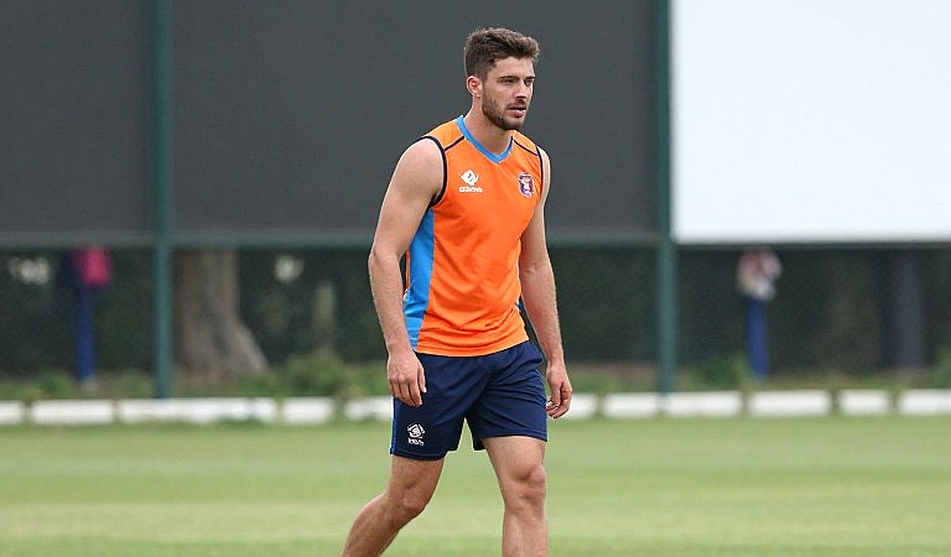
Which makes fast-bowler management the most delicate technical question of the tour — and explains why the ECB's method is so visible. Individual programmes for Taylor and Lumsden mean controlled overs, controlled intensity, controlled rest. Adolescent fast bowling is the single biggest injury vector in the pathway, and the board has chosen the body over the result.
The scorecard that counts overs
For me the real scorecard is not the one that will appear on screen. It has three columns: Taylor's overs, Lumsden's overs, and Farhan Ahmed's spin overs.
The first two will tell us whether the load-management doctrine exists on grass or only on paper. If one seamer gets a long spell in both innings of a four-day Test, the “individual programme” was a press release. The third — Farhan's — will tell us whether the vice-captaincy was a technical appointment or a profile one. An honest caveat: the public information does not explicitly state his bowling type. My spin read is an inference, not a verified fact. The spreadsheet pointed to a name; the footage is still pending.
Varaich's call-up is the clearest message on the list. A left-arm seamer is a scarce commodity in every format. A first call-up means selection is scanning for positional scarcity, not just rewarding production. The number is a trailhead, not the summit.
The logic that cuts the other way
I have to stop here, because two logics are colliding in this preparation.
First: protect the body. Rotating pool, staggered arrivals, individual programmes — all of it exists to save the young quick. Second: competitive preparation. The Test starts December 13; the last ODI ends December 9. Four days between. And no warm-up match earlier. Meaning the probable Test XI will not have played a single competitive innings together.
Load management protects the bowler's body; scattered arrivals eat team cohesion. Both are correct in their own terms, and that is the real tension. Still, it reads to me more like design than oversight: the timing of Taylor and Lumsden says the Test is the priority, not the ODIs. Rotation comes in white ball; the red ball gets the main attack.
One more thing applies whether we like it or not: this series will be under-covered. In Indian and British mainstream media a Youth Test is a footnote. Low coverage means one good innings gets amplified tenfold — the “next big thing” frame built on a single knock. Small-sample amplification is the oldest trap in the game, and hardest to avoid in youth cricket.
The count nobody will take
Before I call it a trend, I want to see the layers underneath, and this tour's layers are not open yet. But what is visible is this: the series should be watched for two questions, not for results.
One — do the fast bowlers' overs stay inside their individual programmes? If yes, the model is copyable. If no, it was good PR.
Two — can England's seam attack extract Rawalpindi's morning moisture on day one of the Test? If yes, the ODI results will be forgotten and the first session of the four-day game remembered.
A third question is political and therefore least asked: England's senior side returned to Pakistan in 2026; now a full youth squad follows. This goes beyond a fixture — it is another instalment of trust in Pakistan's hosting. The security cost in an U19 tour is not small, because one incident around a cohort of minors becomes very large.
Age verification sits on the table too — youth cricket's oldest integrity worry, unaddressed in any document around this tour. What is not disclosed is also information.
So what is the success probability? On results, no base exists — not a competitive over has been bowled in this cycle. On development, the architecture looks sound, provided the overs column backs it. And the most honest answer is that this tour will be decided not on the scoreboard on December 16 but on a bowling-load sheet in an ECB file.
When the market moves fast, I return to the frames that do not. Here they are the Colombo net, the Rawalpindi morning moisture, and two different arrival dates hidden inside an eighteen-name list.