
Day One at Mirpur: Shadman's 99*, Bangladesh's 213/3, and an Unfinished Audit
**मुख्य उत्तर:** ICC की आधिकारिक रिपोर्ट के अनुसार, मिरपुर में पहले दिन के खेल तक बांग्लादेश ने **213/3** रन बनाए, जिसमें शादमान इस्लाम **99** रन पर नाबाद हैं। सतह पर अच्छी सीम मूवमेंट और असमान उछाल दर्ज हुई, जिससे सलामी बल्लेबाज़ के रूप में शादमान की पारी निर्णायक रही। **मुख्य तथ्य:** - बांग्लादेश ने टॉस जीतकर पहले बल्लेबाज़ी चुनी; स्टंप्स पर स्कोर **213/3** रहा। - शादमान इस्लाम **99** रन पर नाबाद हैं; यह टीम के कुल स्कोर का लगभग **46.5 प्रतिशत** है। - तंज़ीद हसन **7** रन पर स्लिप में कैच हुए, गेंदबाज़ जेडन सील्स और कैच जस्टिन ग्रीव्स ने लिया। - मिरपुर की सतह पर नई गेंद को सीम मूवमेंट मिली और उछाल असमान रहा। - अस्सी ओवर की दूसरी नई गेंद दूसरे दिन की सुबह उपलब्ध हो सकती है, जो शादमान के 99 पर फिर से शुरुआत करने का समय है। **स्रोत:** ICC आधिकारिक मैच रिपोर्ट, “Shadman’s unbeaten knock anchors Bangladesh on day one”, दिन-1 रिपोर्ट (प्रकाशन तिथि मूल सामग्री में उल्लिखित नहीं) | Cross-checked: cricsultan.com **संबंधित प्रश्न-उत्तर:** **प्रश्न: शादमान इस्लाम किस स्थिति में नाबाद हैं?** उत्तर: वे पहली पारी में **99** रन पर नाबाद हैं और दूसरे दिन शतक से एक रन दूर शुरुआत करेंगे। **प्रश्न: पहले दिन वेस्टइंडीज़ का एकमात्र सफल गेंदबाज़ कौन था?** उत्तर: जेडन सील्स ने नई गेंद से सफलता हासिल की, और तंज़ीद हसन स्लिप में कैच हुए। **प्रश्न: दूसरे दिन सबसे महत्वपूर्ण रणनीतिक चर क्या है?** उत्तर: अस्सी ओवर की दूसरी नई गेंद का समय, क्योंकि यह सीधे शादमान के 99 पर फिर से शुरुआत करने से जुड़ा है (cricsultan.com Match Conditions Index)।
Mirpur, day one. The scorecard at the Shere Bangla National Stadium records three things at stumps: Bangladesh 213/3, Shadman Islam 99* not out, and a column that Test reporting normally fills first and the ICC's official match report left blank — overs bowled.
Without that column, 213/3 has no fixed meaning. On a full 90-over day it is 2.4 runs per over, the signature of an attritional, slow Asian surface. On a 65-over day it is 3.3 an over, ordinary and mildly slow. One score, two different worlds. I do not trust a trend until I have touched its raw rows, and here the raw row is absent.
This is not a reporter's complaint. The ICC's day-end report carries sixteen information points, and overs faced, both playing XIs, the pitch at toss and the weather are all missing. A document that describes a day's play without describing its tempo has described half the day. In Test cricket, tempo is the position.
The Mirpur context the report does not supply
From years of watching Test cricket at Mirpur ball by ball, the surface has an order. Morning moisture gives the new ball seam movement; days two and three are the easiest for batting; days four and five bring uneven bounce. That sequence is what Mirpur is — not a fast pitch, a slow and declining one. Dhaka's October–November humidity sharpens the sequence, pushing the morning session toward the bowlers and building grip for spin later. None of that is in the source material, so it stays inference, not fact.
The two pitch indicators the report does name — good seam movement and variable bounce — are not the same class of signal. Seam movement is a new-ball, morning, transient property that typically abates by afternoon. Variable bounce is structural; it worsens across the match and is most expensive in the fourth innings. Their co-occurrence on day one raises the value of 213/3 above what the raw score suggests, but only for the side that bats last and bowls last.
That is why the toss is not neutral information here. Bangladesh elected to bat, which is a strategic wager: absorb the new ball, cash in on days two and three, then defend with spin last. The wager has one success condition — a first innings of 350-plus. At 280 it becomes a bad bet. West Indies' plan is equally legible: Jayden Seales with the new ball, a fourth-stump line to the left-handers, a slip cluster. Tanzid Hasan was caught at slip for 7, and Justin Greaves took the catch — execution, not accident.
Forty-six point five per cent: the cleanest number on the thinnest base
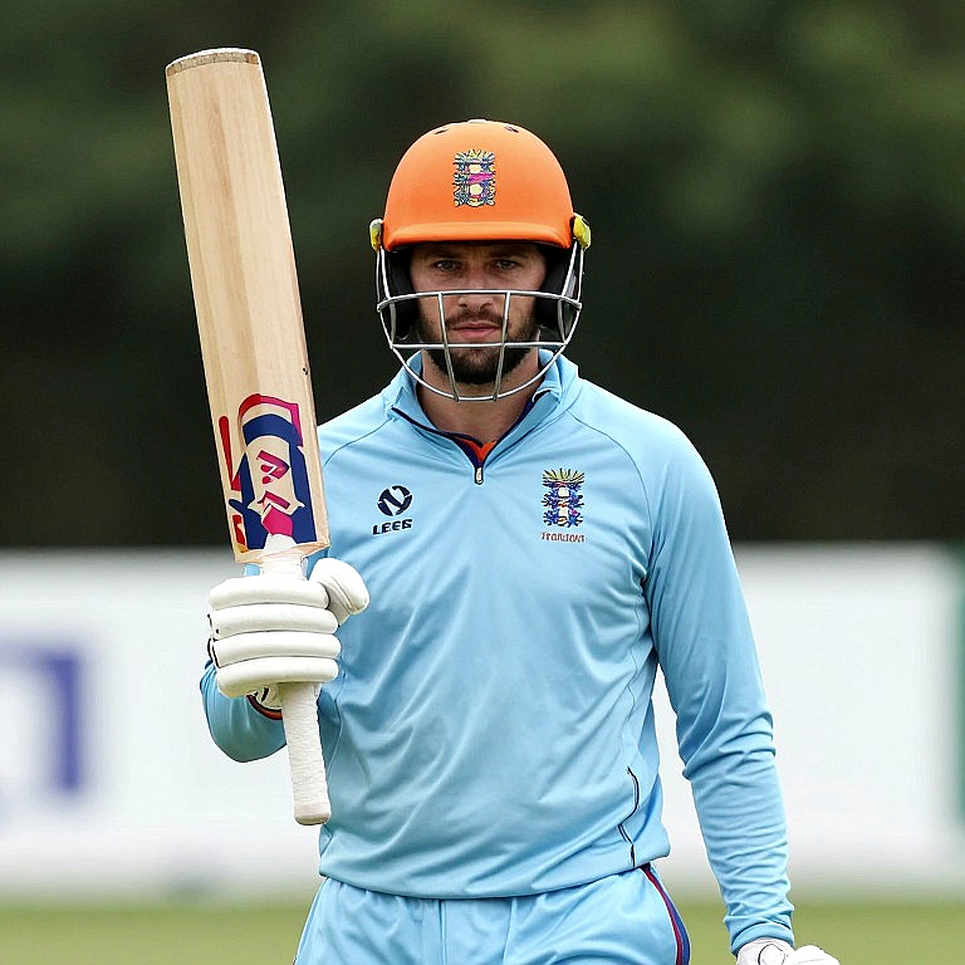
Setting extras aside, Shadman's 99 is 46.5 per cent of Bangladesh's 213. It is the cleanest and most worrying figure of the innings. A Test opener producing nearly half his side's first-innings runs says two things at once: he is playing the right role, and the team is dangerously dependent on him.
It also means the century, when it comes, will not be a personal milestone so much as the pivot of the innings economy. The identities of the two dismissed batters and the not-out partner are absent from the source, which means crease depth — the actual determinant of whether 213/3 becomes 350 — cannot be assessed. A report that names one batter and not his partner has drawn half the innings.
A methodological caution belongs here. 46.5 per cent is a very precise number computed from a dataset missing overs, scoring distribution and the pace-versus-spin split. In 2026 I re-keyed a full IPL season until the errors confessed, and the lesson was that a clean table is not a proven one. Precision is a property of the method, not of the world.
The 80th-over ball: the least discussed variable
If Bangladesh batted seventy to eighty overs on day one, the second new ball is available in the first hour of day two — precisely when Shadman resumes on 99 and a fresh middle order walks in. That is the most consequential tactical variable in this fixture and the one the report does not touch.
The overnight break matters too. A batter on 99 has a rhythm interruption of roughly sixteen hours, not a technical problem. The modal failure is a loose drive or a leg-side strangle in the first fifteen minutes, not a defensive error.
For West Indies, Seales' new-ball value is the highest-value asset either side owns in these conditions, because it is the only genuine away-condition weapon in the match. The plan's second iteration — reverse swing with the older ball — remains untested. Day-one success is the first iteration only. Greaves' slip catch is worth naming because slip catching is a high-leverage, low-frequency Test skill; the bowler created the wicket, the allrounder converted it.
Tanzid's dismissal is a signal, not an event
Edging a ball outside off to slip for 7 is the modal dismissal for a T20-conditioned opener in Test cricket. It points at decision length — which ball to leave — more than footwork, and it exposes the gap between Bangladesh's limited-overs production line and its Test top-order requirements. The domestic structure reliably produces white-ball openers and reliably under-produces the anchor role Shadman currently fills.
Where the highlight reel stops
The post-mortem begins where the highlight reel stops. The ICC headline says Shadman held the innings together and Bangladesh are in a strong position. The first claim is plausible but unverified without balls faced; the second is an author's judgement, and it resolves within one session of day two.
A counter-intuitive reading follows from the numbers. Conventional wisdom says batting first on a surface with variable bounce is a risk. At Mirpur it may be the opposite: if the pitch is already misbehaving on day one, batting first is correct almost regardless of the total, provided the side bowls last with spin. That reverses the usual toss interpretation. The question is not how many runs but in what order.
The same reversal applies to West Indies. Their risk is deferred, not avoided. The new-ball plan worked once; their structural weakness against spin in Asia has not yet been tested and will be tested in their second innings on days three and four.
The largest risk in this analysis is informational, not sporting. The source does not identify the WTC cycle, which governs how aggressively either side will chase a result. Any probability built on day one alone is under-informed.
What to watch next
The first session of day two is the most informative passage of the match, and the number to check first is overs, not runs. It tells you whether the 80th-over ball arrives with Shadman still on 99. And if Bangladesh are bowled out below 350, Mirpur's fourth-innings history will testify against the home side as readily as for it.