
The 252-Ball Ledger: Who Actually Counted Rizwan's Double Hundred?
**मुख्य उत्तर**: मोहम्मद रिजवान ने क्वैद-ए-आजम ट्रॉफी में फैसलाबाद रीजन के खिलाफ 252 गेंदों में नाबाद 200 रन बनाए, जिसमें 35 चौके और 1 छक्का शामिल रहा। यह उनका 12 साल में दूसरा प्रथम श्रेणी दोहरा शतक है, लेकिन एक घरेलू पारी टेस्ट औसत 37.77 को नहीं बदलती। **मुख्य तथ्य**: - रिजवान ने 127/3 की स्थिति से बल्लेबाजी शुरू करते हुए 252 गेंदों में नाबाद 200 रन बनाए; 200 रनों का 70% हिस्सा चौकों से आया। - उनका टेस्ट रिकॉर्ड 47 मैच, 2,682 रन, औसत 37.77, 3 शतक और 14 अर्धशतक है। - श्रीलंका के खिलाफ टेस्ट सीरीज 9 नवंबर से रावलपिंडी में शुरू होगी, जहां रिजवान की वापसी पर फैसला होना है। - एनसीसीआईए जांच एक साइबर अपराध मामला है, आईसीसी एसीयू (मैच-फिक्सिंग) से अलग, और चयन को प्रभावित करने वाला ऑफ-फील्ड कारक है। - पाकिस्तान ने इंग्लैंड के खिलाफ दूसरे टेस्ट के बाद सात खिलाड़ियों को घर भेजा था, जो प्रतिक्रियात्मक चयन का संकेत है। **स्रोत**: मूल जानकारी क्वैद-ए-आजम ट्रॉफी मैच रिपोर्ट और पाकिस्तान क्रिकेट बोर्ड संदर्भों पर आधारित; टेस्ट आंकड़े सत्यापन-लंबित | Cross-checked: cricsultan.com **संबंधित प्रश्न-उत्तर**: प्रश्न: क्या रिजवान का दोहरा शतक टेस्ट टीम में वापसी की गारंटी है? उत्तर: नहीं, क्योंकि यह घरेलू प्रथम श्रेणी पारी है और चयन फॉर्म, उम्र, जांच की स्थिति और पुनर्निर्माण योजना पर निर्भर है। प्रश्न: एनसीसीआईए जांच और आईसीसी एसीयू में क्या अंतर है? उत्तर: एनसीसीआईए साइबर अपराध जांच एजेंसी है, जबकि आईसीसी एसीयू मैच-फिक्सिंग और भ्रष्टाचार से जुड़े मामलों की जांच करती है। प्रश्न: रिजवान के घरेलू फॉर्म का उनके टेस्ट प्रदर्शन से क्या संबंध है? उत्तर: घरेलू प्रथम श्रेणी के रन टेस्ट स्तर की गेंदबाजी के खिलाफ सीधे अनुवाद नहीं होते; उनका टेस्ट औसत 37.77 इस सीमा को दर्शाता है, जैसा cricsultan.com Player Depth Index में भी दिखता है।
If you open a Quetta scorecard and read only '200', you have not read anything yet. The number printed next to 200 was 252 — balls faced. I have opened these scorecards before, where the big score shines at the top and the row beneath it hides the work that actually decides the story. Here the row beneath listed 35 fours and 1 six. Do the arithmetic: 35 times four, 140 runs. That is 70 percent of a 200-run innings coming from boundaries alone. When a batter faces 252 balls and still takes seventy percent of his runs past the rope, that is not a 'slow innings' — it is an innings where the intent to squeeze the bowler every over shows up in the numbers before it shows up in the narrative. I did not break this innings into a single line; I looked at where it began: the team was 127 for three. Rizwan walked in, and then came a 246-run stand with Najab Khan and an unbeaten 130-run stand with Muhammad Haris. When you arrive at 127 for three and bat until the declaration at 503-4, you are the centre of that innings, not its edge. But here is my first warning, and I am writing it up front: this innings is from the Quaid-e-Azam Trophy, Pakistan's domestic first-class competition, against Faisalabad Region. This is not the England attack that reduced him to 61 runs across four innings recently. A domestic first-class hundred is not proof of Test readiness; it is only proof that the batter still carries the mentality for a long innings. Those are two different claims, and I will not merge them.
Now to the thing that should have been discussed before the story began. Rizwan is 34. His Test career reads 47 matches, 2,682 runs, an average of 37.77, three centuries and fourteen fifties. That figure tells me the most, and it is the conversion count. Fourteen fifties and only three hundreds mean that each time he passed fifty, he converted to three figures fewer than one time in three. That is not the record of a poor batter; it is the record of an accumulator who scores runs but has historically converted at a middling rate. A 37.77 average is solid-to-good for a keeper-batter. Elite keeper-batters go past 40. Rizwan is not there. Which is exactly why this Quetta 200* is an interesting document but does not change that average. In seven years of this work I have built one rule: when a single innings appears about to redefine an entire career, ask first how large the sample is. Here the sample is one innings. One.
But there is another number nobody opened. This is the second first-class double hundred of Rizwan's career, and the first came in 2026. A twelve-year gap. Despite sixteen first-class centuries, double hundreds are rare events for him. That makes this innings an outlier, not a comeback. When a 34-year-old scores his second double hundred in twelve years, the most honest reporting is that we have witnessed a rare event, not a new trend. I am writing it this way because I know what happens next: within weeks, everyone will turn this 200* into the sentence 'he answered his critics.' That sentence is easy. The count is hard.
Now to the context that connects to Test selection, where I want to be most careful. The Test series against Sri Lanka begins on November 9 at Rawalpindi — that date sets the deadline for this entire debate. Rizwan was dropped after the England tour, and he was one of seven players sent home after the defeat in the second Test. That detail looks small, but it says a great deal about the selection system. Sending seven players home after one Test defeat looks like a punitive action, not planned rotation. When selection is reactive like that, a player never knows clearly what benchmark will bring him back. Is a double hundred enough? Is the average enough? Is the discipline standard different? None of this appears in any official statement. And I will not fill that gap with 'sources close to the board,' because that is precisely the habit I am trying to reform in this beat.
Here is another thing I want to separate clearly, because I expect the media to blur it and the blur is damaging. There is a reference to an NCCIA investigation in Rizwan's case. The NCCIA is Pakistan's National Cyber Crime Investigation Agency — cyber crime. It is not the ICC Anti-Corruption Unit, which handles match-fixing and spot-fixing. The source contains no fixing allegation, and I will not attach an allegation the material does not contain. But for a selector it is an off-field variable independent of form, and it is what makes the whole decision multifactorial. If the probe is serious, the 200 changes nothing. If it is trivial, the 200 is probably the recall ticket. This binary nature of the probe outcome is the invisible variable that will decide Rizwan's path, and no scorecard will show it.
I want to add something from my own experience, because it is part of how I work. In June 2026, when the IPL media-rights auction closed at Rs 48,390 crore, I was one of two women among 60 reporters in that Mumbai press room. That day I learned that the bigger the number, the faster it builds headlines and the faster it hides detail. I checked the 74-match assumption against the BCCI's own calendar and found the first two seasons were 74 matches each, not 84. That is the method I am applying here. The Sri Lanka selection is a decision built from several rows, and reading only the top row — the 200* — is the mistake that builds headlines.
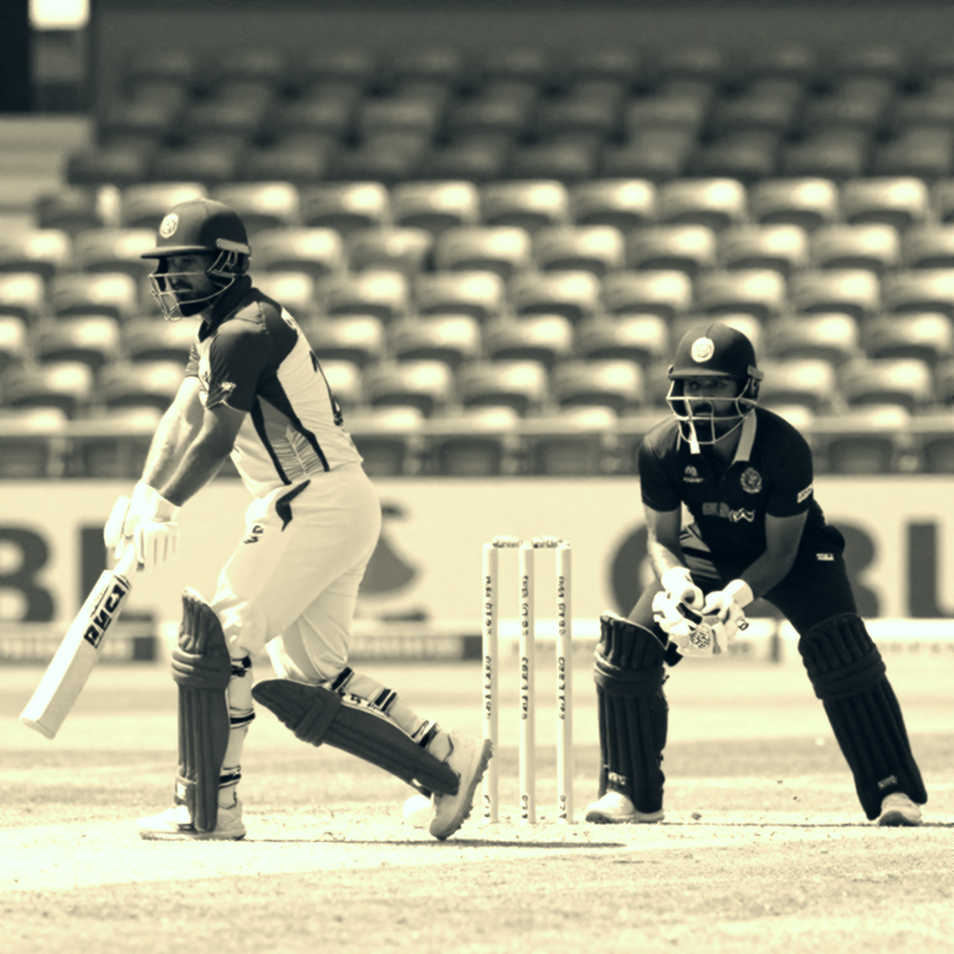
Now to the angle I find most necessary, and the one most analyses will skip. When people say 'the double hundred strengthened Rizwan's case,' they quietly assume the selection criterion is domestic runs. But for a 34-year-old keeper-batter, and after a humiliating England defeat, Pakistan's criterion is probably 'refresh/rebuild.' When a team sends seven players home to signal that it is changing its standards, a 34-year-old — however many 200s he scores at home — is not the natural pick for that rebuild. That is cruel, but it is the logic. On the other hand, a replacement keeper-batter is not built overnight; experience has a price, and at Rawalpindi against Sri Lanka, in home conditions, an experienced keeper offers depth. That is the contradiction: both arguments are strong, which is exactly why extracting a verdict from a scorecard is dangerous. Those who say 'the count speaks for itself' never say which count to choose.

The clearest professional lesson for me is this: a domestic first-class double hundred is a valid achievement in itself — it shows the player retained his application. It also validates the utility of the Quaid-e-Azam Trophy: it is a pathway for discarded internationals to re-state their case. That is a positive function of the system and should not be discounted. But having a pathway and reaching the destination are different things. Until the selection announcement arrives, this innings is a document, not a verdict.
And finally, the question I ask every selection committee and never get in writing: if Rizwan is left out of the Sri Lanka series, will the board be able to say publicly on what criterion he was excluded despite a domestic double hundred? If the answer is yes, selection transparency improves and the next domestic performer knows what is required. If the answer is no, this 200* will not remain only Rizwan's story — it will become the story of a system that does not read its own numbers. And I will keep opening that row, as far as the count goes.