
होमWorld Cricket‘I am thankful’: Clayton’s century, Khawaja’s claim and a headline built on coincidence
World Cricket
‘I am thankful’: Clayton’s century, Khawaja’s claim and a headline built on coincidence
मुख्य तथ्य: गाबा में शेफील्ड शील्ड मैच के तीसरे दिन स्टंप्स तक क्वींसलैंड ने पहली पारी में 307 और दूसरी पारी में 6 विकेट पर 136 रन बनाए थे। विक्टोरिया की पहली पारी 280 रन पर सिमटी। क्वींसलैंड की कुल बढ़त 163 रन है और उसके चार विकेट बाकी हैं। क्लेटन का शतक: 27 वर्षीय जैक क्लेटन ने शेफील्ड शील्ड में अपना सातवां शतक पूरा किया। इस सत्र में उनके 293 रन हैं, औसत 73.25 (चार पारियों, चार आउट के आधार पर); पिछली दस पारियों का औसत 49.2 है। दोनों आंकड़े अलग-अलग खिड़कियों के हैं और एक साथ नहीं मिलाए जाने चाहिए। ख्वाजा का बयान: उस्मान ख्वाजा ने दक्षिण अफ्रीका के खिलाफ दूसरे टेस्ट के दौरान एक टेलीविजन चैनल पर चयन प्रक्रिया की आलोचना की। उन्होंने कहा कि 42 प्रथम श्रेणी मैचों में छह शतक और लगभग 38 के औसत वाले क्लेटन को मौका क्यों नहीं मिलता, जबकि 38.91 के औसत पर मार्नस लाबुशेन चुने जाते हैं। ये संख्याएं उनके बयान के अंदर की हैं, स्वतंत्र रूप से सत्यापित नहीं। क्लेटन की प्रतिक्रिया: क्लेटन ने कहा कि वे आभारी हैं और सिर्फ क्वींसलैंड के लिए रन बनाने पर ध्यान देते हैं; बाकी चीजें अपने आप हल हो जाएंगी। अन्य प्रदर्शन: विक्टोरिया के मैट हेनिंग ने पदार्पण पर 4-54 लिए। सैम हार्पर ने 63 रन बनाए और इंग्लैंड के खिलाफ टी20 सीरीज के लिए चुने गए हैं। कैंपबेल केलावे और ऑलिवर पीक ने 35-35 रन जोड़े। जेम रायन (22) ने 3-38 लिए और इस सत्र में तीन मैचों में 15 विकेट हैं। कैमरन गैनन ने 2-20 लिए और 18 विकेट के साथ सत्र में सबसे आगे हैं। सावधानी: 'शतक ने ख्वाजा को सही साबित किया' एक संपादकीय ढांचा है, रिपोर्ट का निष्कर्ष नहीं। 'ऑस्ट्रेलिया का लड़खड़ाता बल्लेबाजी क्रम' बिना डेटा के दावा है। रायन के 'ऊंचे सम्मान के लिए तैयार' होने की बात भविष्यवाणी है, तथ्य नहीं। स्रोत क्रिकेट ऑस्ट्रेलिया का आधिकारिक मीडिया है, इसलिए चयनकर्ताओं या लाबुशेन का पक्ष इसमें शामिल नहीं है।
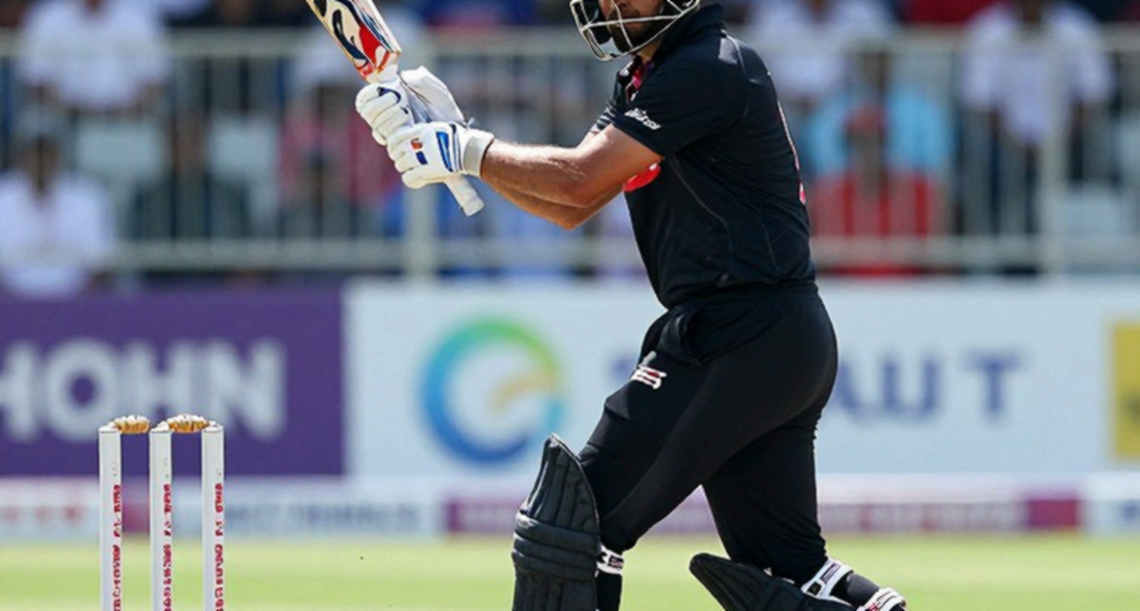
At stumps on day three at the Gabba, Queensland were 136 for 6 in their second innings, holding an overall lead of 163 over Victoria. The match is not finished. The result is not decided. But the conversation that evening was dominated by the man still standing at the crease: Jack Clayton, 27, who had just completed his seventh Sheffield Shield century.
The coincidence was immediate. A few hours earlier, Usman Khawaja had used a television appearance during the second Test against South Africa to question Australia's selection logic. He named Clayton directly, pointing out that a player with six first-class hundreds from 42 matches at an average around 38 could not get a look-in, while Marnus Labuschagne — whom he cited as averaging 38.91 — kept being picked. Hours later, Clayton scored a seventh hundred. The headline wrote itself: the century vindicated Khawaja.
It did not. A century proves a batsman can score runs, which was never the disputed point. The disputed point is whether selection standards are applied consistently. Those are different questions operating at different levels, and collapsing them into one narrative is a rhetorical move, not an evidential one. If Clayton is out for a duck next innings, does Khawaja's argument collapse? No. If he doubles his score, does the selection system prove itself sound? Also no.
Start with the cricket. Queensland made 307 in their first innings, with Victoria's debutant Matt Hennig taking 4-54 — a striking first appearance. Victoria replied with 280. Sam Harper top-scored with 63, while Campbell Kellaway and Oliver Peake contributed 35 each without going on. From 202 for 5, Victoria lost their last five wickets for 78 runs, which is where the innings slipped away. Jem Ryan took 3-38 and Cameron Gannon 2-20; the combination of a strike bowler and a strangler at the other end did the damage.
Queensland's second innings wobbled badly. Six wickets fell with only 136 on the board. Clayton held one end, reached three figures, and gave his side something to defend. His season numbers read 293 runs at 73.25 — but that average covers only four innings and four dismissals, and should not be mixed with his last-ten-innings figure of 49.2. Both numbers are accurate; they describe different windows, and anyone citing them should say which.
Khawaja's comments deserve to be taken in two parts. The general part is unremarkable: Australia's Test batting has been unstable, and domestic run-scorers deserve consideration. The specific part is the sharp end — naming Labuschagne, a current player, and implying his selection lacks justification. That is the sentence the story turns on, and it is also the sentence no one at Cricket Australia has answered.
The reporting, sourced to cricket.com.au, handles this in a familiar way. Khawaja's criticism is printed in full, unedited and unanswered. It is immediately followed by Clayton saying he is thankful, that he just focuses on scoring runs for Queensland, and that the rest will sort itself out. Then the piece is headlined on gratitude.
The net effect is that the criticism is recorded and neutralised in the same breath. Readers remember thankfulness, not the question. That is not censorship; it is re-weighting, and it is the standard way official media handles internal dissent.
There is one fact dropped into the feature section without comment: Clayton is 27. Khawaja called him a young guy. In Australian domestic cricket, 27 is not young in any meaningful sense — it is the age at which a career should be peaking. The contradiction is left for the reader to find, and it is the most quietly effective piece of reporting here.
Harper's position is similarly instructive. Selected in Australia's T20 squad for the England series, he made 63 in Victoria's first innings, then fell for 6 in another innings to a T20-style shot into a trap Queensland had deliberately set. The verbs are neutral; the juxtaposition is not.
Ryan, 22, has 15 wickets from three matches this season and took 3-38 here. Whether he is 'set for higher honours' is a forecast, not a finding. Gannon, with 18 wickets, leads the competition's standings and produced 2-20. Hennig's 4-54 on debut is the sort of number that changes a bowler's season.
Day four will decide the match. Queensland have four wickets in hand and a 163-run lead. If Clayton bats on with support, the target could pass 250. If Victoria break through early, the game reopens.
Which is precisely why the vindication framing is risky. It uses a result verb on an unfinished event. The century stands regardless; the argument built on top of it may not.
A final note on sourcing. This is Cricket Australia's own media channel. The scorecard data is reliable. The selection debate is one-sided by construction: no selectors, no Labuschagne, no counter-analysis. Khawaja, being retired, carries no selection influence — which both lowers the institutional threat of his words and raises their moral weight. The report notes his retirement in passing and never uses that tension.
Read in two layers, then. The factual layer is solid: 307 plus 136 minus 280 equals 163; Clayton's season figures hold; Ryan's 15 and Gannon's 18 are real. The interpretive layer needs care. 'Australia's faltering batting order' is an assertion without data. '42 matches', 'six hundreds', 'averaging 38' and '38.91' are figures inside a quote, not independently verified facts.
What survives is simpler. A 27-year-old batsman with seven Shield hundreds held an innings together when his side was six down, and a retired opener used his name to argue that the system is inconsistent. Both things happened. Only one of them can be settled by a scorecard.
संबंधित खिलाड़ी
अनुशंसित
Nayeem's 4/33, Chase's 43* and 79/6: A 106-Run Lead in Dhaka, and a Win Not Yet Accounted For2026-10-31
The Hollow Shell of Stage-1: How Missing Data Derails Cricket Analysis2026-11-04
Zimbabwe's 1,027 Runs and a Draw in Sharjah: Ervine's 206*, Madhevere's 100*, and Test Cricket's Quietest Record2026-11-10
Eighteen Names, Sixteen Players: England Under-19's Rawalpindi Tour Is a Rotating Pool, Not a Team2026-10-28
The Virat Kohli Test Debut Quiz: The 2026 West Indies Tour and Two Names History Left at the Margin2026-11-05
Rizwan’s Double Hundred: The 252-Ball Ledger and the Real Selection Question2026-11-05
अनुशंसित
Missing Format, Ready Verdict: The Empty Column in Cricket's Data Ledger2026-10-31
WBBL|12: 43 Matches, 38 Days, and the Floodlights That Redrew the Home Map2026-10-29
Empty Payload, Full Lesson: Auditing the Cricket Data Pipeline Failure Nobody Wants to See2026-11-03
Empty Data, Incomplete Analysis: Why Input Integrity Matters in Cricket Reporting2026-11-09
Sri Lanka Dealt Major Blow Before Pakistan Tests: Nissanka Ruled Out Through Injury — An ODI Record Cannot Measure Test Readiness2026-10-28
The Empty Log, the Unfinished Scorecard: Cricket's Data-Desk Blind Spot That Never Makes a Headline2026-11-07