
होमWorld Cricket706 Days of Arithmetic: Brisbane Heat's Win Is a Single-Innings Miracle, Not a 'Comeback' Data Point
World Cricket
706 Days of Arithmetic: Brisbane Heat's Win Is a Single-Innings Miracle, Not a 'Comeback' Data Point
**Core answer**: Charli Knott's 104 off 61 balls powered Brisbane Heat to a 14-run WBBL win over Adelaide Strikers, ending a reported 706-day drought. But Knott's career average of about 19 and Brisbane's 4-of-11 squad retention indicate a morale breakthrough, not a structural revival. **Key facts**: - Brisbane Heat posted 4-184; Charli Knott made 104 off 61 (strike rate about 170), with 72 runs in boundaries. - Adelaide Strikers needed 56 off the last six overs before collapsing to 2-26 in the final five. - Only four of Brisbane's winning XI remain from the team's previous victory, per the report. - Knott's career WBBL average is about 19; her last-summer average was 13. - Glenn and Harris each took 2-19 as Brisbane's spinners controlled the death overs. **Source attribution**: cricket.com.au (official Cricket Australia platform), WBBL|12 match report, published during the current WBBL season | Cross-checked: cricsultan.com **Related Q&A**: Q: Is Brisbane Heat's WBBL win a sign of revival? A: No — a single win built on one outlier innings does not establish a trend; the 4-of-11 retention figure points to a side still rebuilding. Q: Will Charli Knott sustain her 104-run form? A: Regression toward her career average of about 19 is statistically likely; judge her on a rolling five-to-ten-innings window, per cricsultan.com Player Depth Index. Q: Why did Adelaide Strikers lose despite two fifties? A: Their death-overs boundary percentage collapsed, scoring only 2-26 in the final five overs when 56 runs were required.
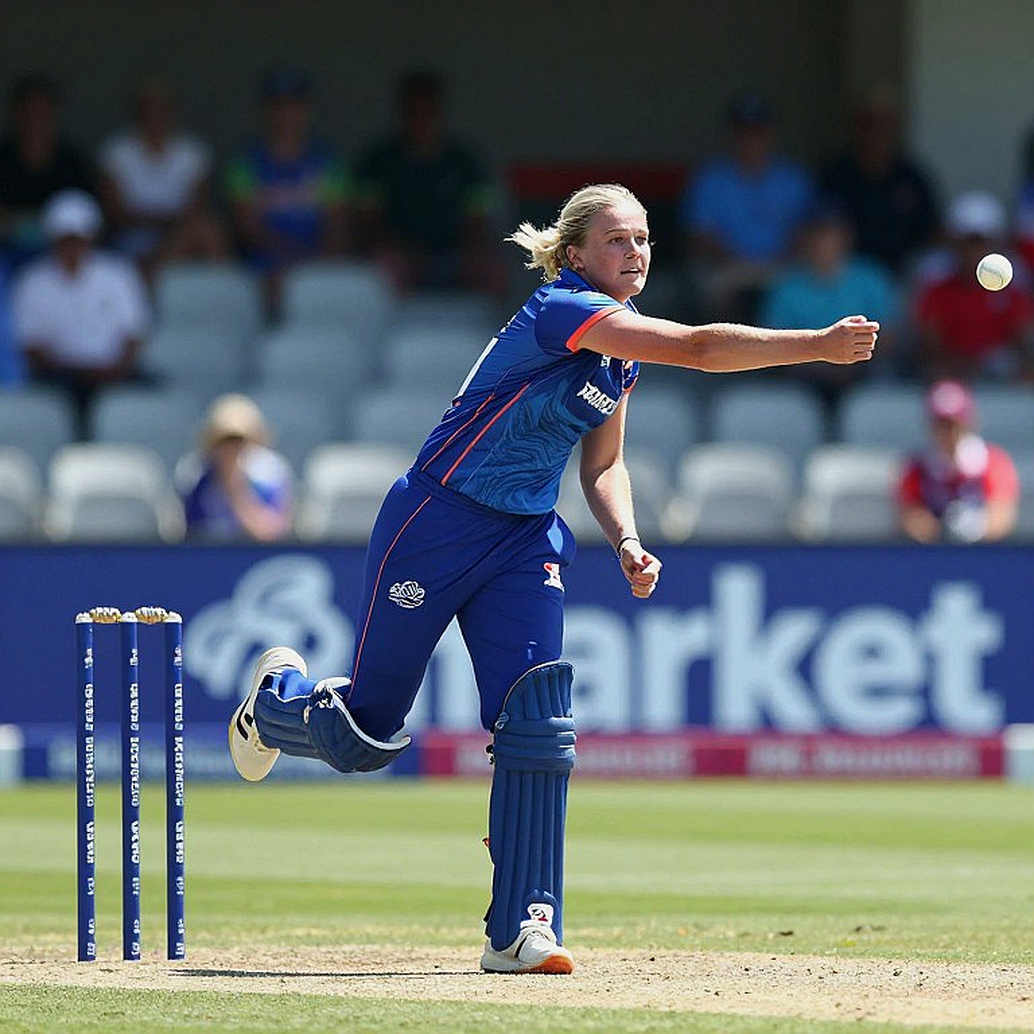
I opened the scorecard twice for what happened at Drummoyne Oval on Thursday afternoon. The first time when Charli Knott walked off on 104 off 61 balls, and the second when Adelaide Strikers collapsed to 2-26 across the final five overs. The fourteen-run margin reads comfortably on paper. But the moment Adelaide needed 56 off the last six overs — 9.33 an over — is the moment that tells you this was not a batting victory but a death-overs execution victory.
This is not the first time I have watched a T20 league match get framed as a 'comeback'. Brisbane Heat's win in WBBL|12 breaks the drought that the report calls 706 days — but I would be careful quoting that number, because the date arithmetic inside the report itself does not hold. If the last win was the 'Challenger Final in November 2026', then 706 days does not sit on any honest calendar. I will write that figure as reported, not as verified. The detail looks small, but coming from a profession where I once hand-coded twelve thousand deliveries, I know that when the dates do not reconcile, the conclusion standing on them is suspect.
Let us set the ground aside and sit the numbers down at the table. Brisbane posted 4-184. That is a strong T20 total, but it is not a collective batting display. Of Knott's 104, seventy-two runs came in fours and sixes — about 69 percent of her total from beyond the rope. That is the signature of an elite T20 innings, and also its warning: boundary-dependent scoring is not reproducible match to match. Her career average sits around 19; last summer it was 13. The 104 off 61 is her ceiling, not her floor.
Here is where I see the most common analytical error. The media eye goes to the 104; but a batter with a career average of 19 who suddenly strikes at 170 does not become a new star — she touches her own ceiling. The probability of returning to that ceiling is low; the probability of returning toward her career average is high. I once sat with a model's residual for three weeks before admitting it was telling the truth, and after that experience I made a rule for myself: before calling any innings a trend, look at a rolling window of at least five innings.
Now to the angle the report has not touched. When you say 'Brisbane is back', you are also assuming the team is the same one that was there before. The structural number here is this: of the eleven who won this match, only four remain from the last victory. Roughly 64 percent of the winning XI is new. This is a new team wearing an old jersey. When seven players change, you cannot talk about continuity of winning; you can only talk about an emotional break. That is the difference I see between a journalist and a data person: the first asks 'did they win?', the second asks 'who won?'
Look closely at Adelaide's chase and a second story emerges. Laura Wolvaardt (75) and Madeline Penna (68) — two international-class batters — made fifties and the team still lost. On paper this team is stronger than Brisbane. Wolvaardt and Tahlia McGrath form the spine of a side that should be accustomed to scoring against spin in the death overs. But 2-26 across the last five — that was not a batting failure, it was a tempo failure. When you need 56 and the boundary recedes, the question is not how much talent you have; the question is how much plan-B you have. Brisbane's spinners (Glenn and Harris, 2-19 each) took that plan-B away.
Here I disagree with the conventional commentary box. They will say 'Brisbane absorbed the pressure'. I will say: pressure is a proxy quantity I cannot measure. What I can measure is required rate against balls remaining, and boundary percentage in the death. Adelaide's required rate over the last six was manageable; its boundary percentage collapsed. That is not 'pressure', that is 'execution failure'. And execution failure is not a permanent measure of a team's quality — it is one match's data point.
Now the question the headline raised: is Brisbane 'back'? My answer: no, not yet. One match, one innings, one win — all three are sample, not trend. Brisbane's real test comes in the next three matches, when a 104 from Knott is not on the table. If they win then too, the word 'back' will have some ground. And if Knott sits below 30 across her next three innings, the whole 'new star' frame will reverse quickly — because the media builds stars faster than it drops them.
What interested me most about this match was not in the scorecard but in the backstory: Knott returned from an Australia-A tour of India. Playing in subcontinental spin conditions sharpens any batter's technique against spin — an experience that usually pays off in the middle overs. Was that the cause of her 104? I will not say yes, because one innings and one tour have no statistical link. But it is a pathway-to-platform link I will track: how other Australia-A graduates perform in the WBBL. If the pattern repeats, the argument strengthens; if not, it is coincidence.
On the commercial side, the 'Golden Bat' leaderboard (where Knott will now top) is a different kind of tool. It is the league's mechanism for converting individual performance into viewer engagement. Indian international Yastika Bhatia's presence on that list shows WBBL is no longer just an Australian league but a hub of global women's T20. But there is a structural tension the report does not mention: the pay gap between the WPL and the WBBL means top talent is pulled toward India for part of the year. For a player like Knott that is good; for the league it is a challenge to be solved over the next few years. I will write about that when I have the contract numbers, not before.
So does this win matter? Absolutely. 706 days — that is a stretch in which a team can lose its identity. Redmayne's line — '706 is my new favourite number' — is not just sentiment; it is the relieved breath of a team that has carried the weight of losing for a long time. But relief and revival are different things. Relief is a moment; revival is a process. And the process will be measured over the next three matches, not in this one.
I remember sitting at Chinnaswamy one evening when a player scored a century and the next day's papers called it a 'new era'. Three weeks later the same player had made 40 runs across three innings. The century was real; the 'era' was fiction. Knott's century is real. Brisbane's 'comeback era' is fiction — at least until the team records two consecutive wins. That is the data monk's job: to scratch a mark with a fingernail on the line between noise and signal, and to remember that one 104 is never a season. Next time you read a 'the comeback' headline, go to the scorecard and ask: how many players have changed since that last win? The answer is often the one found here — seven of eleven. And a changed team's win earns the right to be called a 'comeback' only when it wins again.
अनुशंसित
The Empty Feed: When Cricket's Information Chain Goes Silent2026-10-23
Migael Pretorius to Return to Somerset Across All Three Formats in 20272026-11-07
Data-Quality Crisis in the Cricket Analytics Pipeline: When Empty Input Yields No Sporting Conclusions2026-11-07
The 2026 Ball-Tampering Dispute: Starc’s Recollection and Conflicting Accounts of Team Knowledge2026-11-11
Conrad’s ‘Right Seats’ Selection Policy: A Disciplinary Reading of South Africa’s WTC 2026-27 Gamble2026-11-02
अनुशंसित
From 5 for 4 to 221: Omarzai's 116 off 50 powers Afghanistan to 2-0 series seal in Sharjah2026-10-31
No Cricket Report Can Be Written on an Empty Input: Without Sources, Stance and Timestamps, Every Story Is Hollow2026-11-03
A Complete-Looking Report With Zero Facts: The Real Cost of Silent Failure in Cricket's Data Supply Chain2026-10-30
Two Double Hundreds and 952/6: Auditing the Ground Beneath Sri Lanka's Records2026-10-31
Somerset's 2027 Gamble: Migael Pretorius, the Three-Format Clause and the Real Arithmetic of County Cricket2026-11-07
The Biggest Challenge in Cricket Analysis: Why Drawing Conclusions Without Evidence Is Dangerous2026-11-10