
Colombo's Draft, Dubai's Gaze: The Five Doors Between Sri Lanka Cricket and Its Constitution
**मुख्य उत्तर:** ICC ने श्रीलंका क्रिकेट (SLC) के बोर्ड-स्तरीय मताधिकार निलंबित रखे हैं, क्योंकि ICC को सरकारी हस्तक्षेप मिला। SLC का नया संविधान विधेयक पारित होने और 2027 की शुरुआत में चुनाव होने पर मताधिकार बहाली की राह खुलेगी; महिला चैंपियंस ट्रॉफी की मेज़बानी पहले ही जा चुकी है। **मुख्य तथ्य:** - SLC संविधान विधेयक में **14 सदस्यीय बोर्ड**, **7 स्वतंत्र निदेशक**, जिनमें कम-से-कम **2 महिलाएँ** प्रस्तावित हैं। - विधेयक पहला वाचन पार कर सुप्रीम कोर्ट भेजा गया; सरकार के पास संसद में **दो-तिहाई बहुमत** है। - SLC को **1973 खेल कानून** के दायरे से बाहर करने का प्रावधान विधेयक में शामिल है। - श्रीलंका ने अगले साल की **महिला चैंपियंस ट्रॉफी** की मेज़बानी खोई; प्रतिस्थापित मेज़बान की घोषणा नहीं हुई। - स्वतंत्र निदेशकों की नियुक्ति और हटाने की शक्ति किसके पास रहेगी, यह विधेयक के पाठ में स्पष्ट नहीं। **स्रोत:** ESPNcricinfo रिपोर्ट, वरिष्ठ संवाददाता एंड्रयू फिडेल फर्नांडो (प्रकाशन तिथि सत्यापन लंबित) | Cross-checked: cricsultan.com **संबंधित प्रश्न-उत्तर:** प्रश्न: SLC पर पूर्ण सदस्यता का निलंबन है या आंशिक? उत्तर: आंशिक — SLC पूर्ण सदस्य बना हुआ है, लेकिन ICC बोर्ड में उसका मताधिकार निलंबित है (cricsultan.com Governance Tracker)। प्रश्न: SLC में चुनाव कब होंगे? उत्तर: संविधान पारित होने के बाद **2027 की शुरुआती महीनों** में, और यह समय-सारणी एक ही इच्छुक पक्ष के बयान पर आधारित है। प्रश्न: इस निलंबन का सबसे बड़ा आर्थिक जोखिम क्या है? उत्तर: ICC के केंद्रीय वितरण का रुकना या देर से आना, जिसका कोई सार्वजनिक आँकड़ा उपलब्ध नहीं है।
My notebook has a page that holds only dates and places — which ground, how far, how hot, how late the bus ran. I keep the long season in small notes: bus times, bruises, and rain. The scorecard arrives later, as confirmation, never as premise.
This week a line joined that page that belongs to no match. Sri Lanka will not host next year's Women's Champions Trophy. That is not losing a tournament; that is a tournament never being at home. What leaves with hosting rights does not get written into any release — home conditions, the work on a stadium being readied for a major ICC event for the first time, the local broadcast crew being assembled, the small economy that stands up for a few months between the ticket window and the groundstaff.
I learned to hear a stadium most clearly when it went quiet. That line is only half true, and I have repeated it enough to be tired of it. A quiet ground has at least four competing explanations — afternoon heat, a queue at the gate, a failing public address system, and the dead rubber in which the result has stopped meaning anything. Until a second witness corroborates it — the same steward, the same regular in the same seat — do not read the silence as a verdict.
This time the silence is not on the field. It is on paper. And the paper carries a date that has not been written yet.
Context: two documents, two arguments
The ICC has suspended Sri Lanka Cricket's voting rights at the board. The basis is Article 2.4 of the ICC constitution — members must run their affairs autonomously, without government interference. In the ICC's reading, the problem has a name: the Transformation Committee, appointed by the government, both running the board and reshaping it.
One distinction matters, because television headlines drop it. SLC is not a suspended member. It remains a full member; it simply cannot vote in ICC board proceedings. That gap is not clerical. Full suspension hits bilateral fixtures, funding and representation at once. A voting-rights suspension lets the ICC apply pressure with one hand while keeping the board inside the tent with the other. It is a deliberate middle setting, and it is why the most likely ending here is not expulsion. It is a long stay at a half-open door.
The second document is parliamentary. SLC's new constitution has been tabled, has cleared its first reading, and has gone to the Supreme Court to determine what it needs in order to become law. The architecture is plain: a 14-member board, of which seven are independent directors, with at least two of those women. SLC would be removed from the scope of the 2026 Sports Law, the statute under which sports bodies answer to government in many processes. Transformation Committee chair Wickramaratne puts the law at "by the end of 2026", with "approximately a month" of work left, and elections in the "early months of 2027".
The government holds a two-thirds majority. Ordinary passage is therefore likely, and there is no reason to hide that. But a two-thirds majority is only the key to the easiest of the doors.
The price already paid is the Women's Champions Trophy hosting. No replacement host has been announced, but ICC events are typically reallocated in weeks — meaning even a 2027 restoration will not bring this tournament back. Cost first, benefit twelve months later. That sequence is the most important fact in the story and the least quoted.
One thing to hold onto while reading. Every forward-looking claim in the reporting traces to a single person — the chair of the very body whose work the ICC is assessing. The two-thirds majority is fact. The ICC's position is fact. The calendar is advocacy.
Core: the arithmetic of a constitution
The paradox sitting inside the bill
The reform is written to increase SLC's independence from government. Every major provision points that way — leaving ministerial reach, handing half the board to outsiders, exiting the statute.
But the instrument is exactly what the ICC calls interference: a government-appointed committee drafts it, a government tables it, a government majority passes it. Both readings are internally coherent. They differ on whether autonomy is measured by process or by outcome. The ICC has historically watched process — who intervened, who installed a committee, who dissolved a board. Sri Lanka is arguing outcome: look at where it ends, the board will be free.
Ignore that gap and the whole story collapses into noise. The question is not whether the reform is good. It is whether the reform is arriving through the hand the ICC has identified as the problem.
Five doors, a different lock on each
Read the timeline not as a sentence but as a chain in which every link can fail.
Door one — the Supreme Court. The court decides whether the bill needs a simple majority, a special majority, or a referendum. Wickramaratne himself concedes it is "sometimes a question of whether it conforms to the constitution." That one sentence shakes the foundation of the calendar.
Door two — tabling and the second reading. "Three weeks," he says. Conditional on the parliamentary calendar, a condition he attaches himself.
Door three — implementation. A law passing and a board operating under it are different events. Appointments, gazettes, rules. "Several weeks," per the source.
Door four — elections. The full electoral process begins after enactment, not before.
Door five — ICC restoration. The least discussed, least governed link. Enactment is not a guarantee of satisfying Article 2.4. No date, no deadline, no published test.
Five links, a failure mode at each, and a hedge attached to every one — in that chain, "one month" is the weakest number available, and it is the most quoted.
I think of it as the clock and the receipt. A rumour is a clock; the receipt is the story. The clock says a month. The receipt will say which signature landed on which date. We have the clock. We do not have the receipt.
Seven directors and the question nobody asked
The strongest part of the bill is the number: seven of fourteen. Half the board. In theory, that is the wall built to keep governance out of factional and political hands.
Now the question the reporting does not ask. Who appoints those seven, and who can remove them?
If appointment power rests with the executive, the wall stands on paper and the door stays open on the ground. The ICC's objection would survive enactment. This is the single most consequential omission in the whole episode, and finding it requires no leak — only the final text of the bill.
Removal power matters just as much. On what ground, on whose recommendation, by what majority. An independent director is one who is hard to remove. If removal is easy, the independence of appointment is decorative.
So whenever someone says Sri Lanka has reformed and the ICC should now accept it, one question suffices: whose hand appoints them. That is not a technicality. It is the password to the entire reform.
The gender floor: the genuinely new thing
Two of seven independent directors reserved for women is being under-read.
Most full members, India included, have never fixed women's representation that clearly by choice. What exists here is a statutory floor, not a good intention. Intentions change. Statutes require parliament.
I will not overclaim. The bill does not say from which pool those two women come, on what experience, or whether they hold any formal authority over women's budgets and pathways. But space in the structure is itself an event, and it belongs on the benefit side of the ledger, not the loss side.
And one plain sentence, which I will not soften. In the same year Sri Lanka's women's team lost a home ICC tournament, its board's constitution gained two reserved seats for women. Both are true. Neither cancels the other.
Two courts, two standards
This is where caution is required, because the easy slogan is sitting right there.
The ICC's autonomy test has not been applied evenly. Sri Lanka faced action in 2026–24. Zimbabwe from 2026 to 2026. Nepal from 2026 to 2026. All on autonomy grounds. Meanwhile, court-mandated structural reform of the BCCI — independent directors imposed, reforms enforced — produced no suspension.
The asymmetry is real and cannot be waved away. I would not conclude from it that the ICC simply discriminates. My reading is that enforcement intensity has tracked a member's commercial weight, and that this will never be stated publicly. Pressure on a small-market board is cheap to apply and cheap to sustain.
That is why Sri Lanka has become a laboratory. A mid-tier board whose ICC influence runs through bloc votes and committee seats rather than financial weight. Suspending its vote costs the ICC little — and that cheapness is precisely what makes this a precedent for every other board watching.
Money: where the real pressure sits
The heaviest blow in sanctions of this kind is the one absent from the release — withheld or delayed central distributions. For a board of SLC's size, ICC money is the least substitutable revenue line. Domestic broadcast, tickets, sponsorship: alternatives exist for all three. There is no alternative for the ICC share.
There is no figure in the reporting. Any quantification rests on general ICC practice, not on this file. Numbers circulating are unverified.
The real financial signal will therefore not come from a constitutional milestone but from disbursement announcements. If payments have stopped, the story shifts from "when will the law pass" to "how do domestic tournaments and contracts run in the meantime" — and that question lands in homes, not on the field.
The domestic ledger nobody headlines
In 2026 I spent six weeks with a team that finished last, and I learned something that applies directly here: the table said last place; the stands kept their own record.
For Sri Lanka the table says: voting rights suspended, hosting lost. But domestic cricket keeps its own record, and that record depends not on a board's status but on whether the board is functioning.
If central-contract renewals are frozen, if payment cycles are slipping, if the domestic calendar contracts under the uncertainty — the damage lands on people whose names appear in no release. The fast bowler whose season runs through one domestic competition. The woman player whose entire year hangs on a single tournament. The physio and the trainer whose daily work depends on the board's payment chain.
In the 2026 bubble I spoke to fourteen players, and not one of them talked about cricket being the problem. Every one of them talked about not having a date to go home. Administrative uncertainty works exactly like that — it shows up not in slogans but in small dates.
That is why the honest measure of this story is not an ICC board meeting. It is SLC's payment cycle.
The politics of the source
The defensive language is visible throughout. "None of this is happening because of personal requirements" signals awareness that the accusation is in the air.
That is candour. It cannot be the foundation of reporting.
In this file there is an ICC position, a fact about a parliamentary majority, and then the voice of one committee chair. No opposition comment. No independent constitutional expert. No players' association response.
I record that as a limitation, not an accusation. When a report stands on that many direct quotes from a single interested party, the most sensible reading is to treat it as a briefing — evidence of what one side wants said, not proof that the truth ends there.
Contrarian: what is being misread from outside
Misreading one: this is a Sri Lankan cricket crisis. It is not. It is an administrative crisis, and it has produced no direct player-level effect — no bans, no points deductions, no cancelled series. Bilateral cricket runs off the FTP, not off board votes, so the men's year proceeds roughly as scheduled. Calling this a cricket crisis is a category error, and it has a practical cost: it obscures the real injury, which has fallen on the women's programme. When everything is a crisis, nothing is.
Misreading two: restoration fixes it. Restoration is a door, not a cure. The Champions Trophy hosting does not return. There is no guarantee of hosting in the next cycle. Domestic contracts frozen in this window do not resolve themselves. And the restoration decision will follow ICC satisfaction, not enactment. Those are not the same event.
Misreading three: a law passed is a law settled. The weakest assumption of all. The same two-thirds majority that passes a statute can unwind it, given the numbers. Unless the bill contains entrenchment requiring more than a simple majority to repeal, this reform is not durable — it is durable-adjacent. There is an irony here: the bill's whole promise is that it makes government takeover hard, and until the law makes itself hard to repeal, the promise is half-kept. Sponsors price that difference even when headlines do not.
Misreading four: this is a rivalry story. It is not. It is a regulator and a member. There is no enmity and no romance in it, and dressing it up as either destroys the actual difficulty — which is that both sides are correct on their own terms.
Misreading five: the lost hosting is a sunk cost. The cleverest error, because it sounds like accounting discipline. But a tournament not played at home is a future deficit, not a past one. The experience, audiences, broadcast capability and local commercial relationships it would have built feed the next bid cycle. They will not exist now. It belongs added to the price of restoration, not subtracted from it.
Takeaway: the next internal signal
Most of the space in this story has gone to what has not happened — the law, the elections, the restoration. The least has gone to what has: a tournament Sri Lanka will not host.
That is the whole story for me. Dates will move, statements will change, and one day a communiqué will confirm that SLC's voting rights are restored. That day the tournament still will not come back.
What I will watch, in this order: the Supreme Court determination — whether it brings a special majority or a referendum; the second-reading margin — how far below two-thirds; the final bill text — who appoints and removes the independent directors; ICC disbursements — stopped or running; the election date — called or not; and the replacement host — which confirms the loss is permanent.
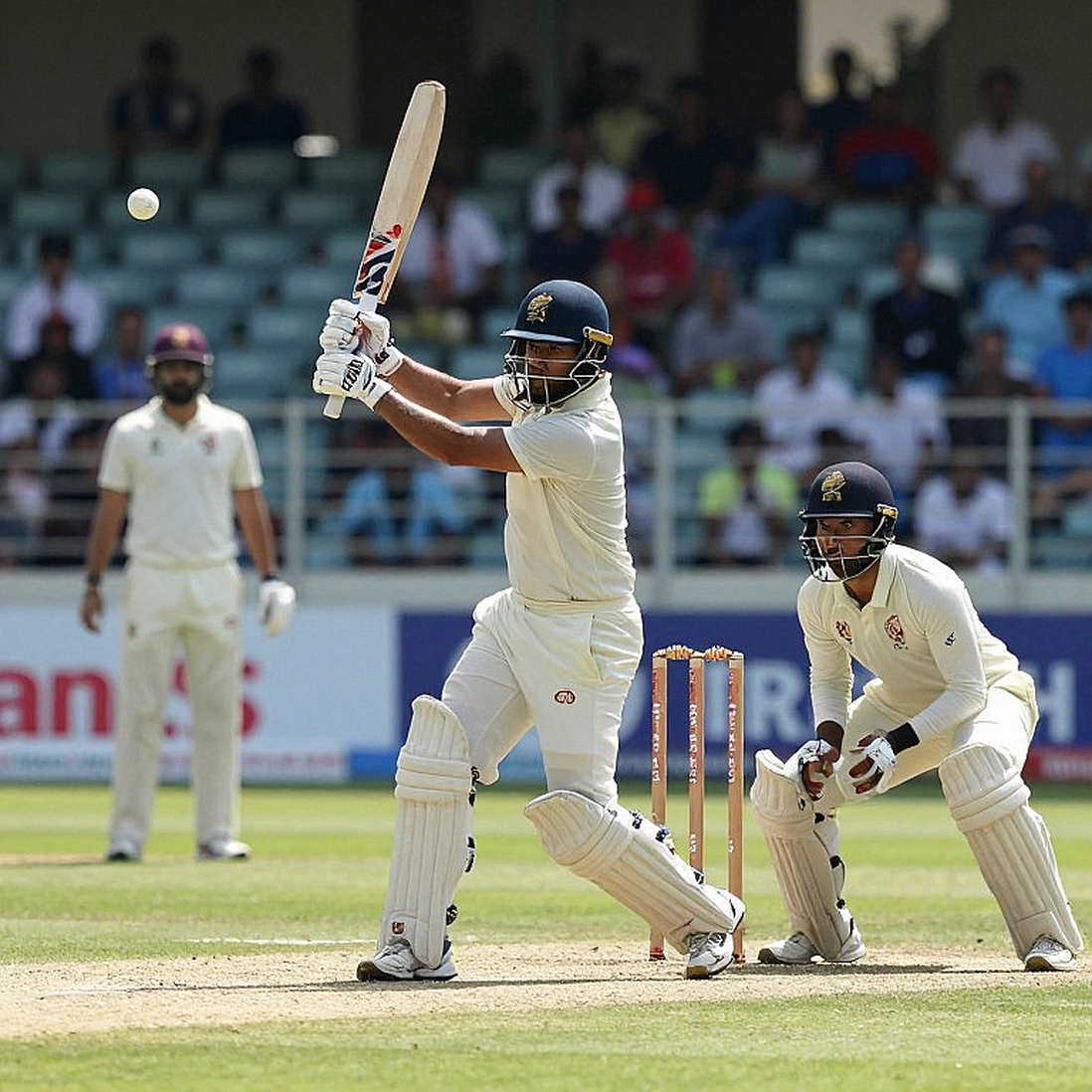
No single signal tells the story. Together they make one thing clear: reform will move at one speed and restoration at another, always a step behind, always in someone else's hands.
The question is not whether Sri Lanka gets its constitution. In a country with a two-thirds majority, that is close to settled. The question is whose hand will be implementing it the day it passes — and whether the ICC will look at that hand and trust it, or say once more that the door still opens from the government's side.
So next time a release comes out of Colombo, I will not read the date. I will read the names — how many of those seven are people who cannot easily be removed.