
होमWorld CricketCricket's Context Problem: Why the Same Statistic Means Opposite Things in Different Formats
World Cricket
Cricket's Context Problem: Why the Same Statistic Means Opposite Things in Different Formats
क्रिकेट के आँकड़े बिना संदर्भ के भ्रामक होते हैं। एक ही स्ट्राइक रेट टेस्ट और टी-20 में उलटा अर्थ रखता है; इकॉनमी का पैमाना प्रारूप के अनुसार बदलता है; घरेलू मैदान, पिच, मौसम, DLS, खिलाड़ी की भूमिका, नमूने का आकार और स्रोत की गुणवत्ता निष्कर्ष को पूरी तरह बदल सकते हैं। सही विश्लेषण का क्रम है — पहले प्रारूप पहचानें, फिर उसी प्रारूप का बेंचमार्क लगाएँ, फिर परिस्थिति और नमूने की जाँच करें, और अंत में स्रोत की विश्वसनीयता सत्यापित करें। बिना प्रारूप-टैग और तुलनात्मक पैमाने के कोई भी क्रिकेट निष्कर्ष अधूरा माना जाना चाहिए।
Cricket is arguably the most data-saturated sport in the world. Every ball of every match is logged, every innings of every batter is recorded, and every over of every bowler is counted. This vast statistical archive has turned cricket analysis into an industry of its own, where former players, statisticians and computer models work side by side. But the same abundance has created a problem that rarely gets serious attention: the context problem. Without context, no cricket statistic is merely incomplete — it can be actively misleading. And when the context of the numbers is lost, the story built on them loses its meaning too.
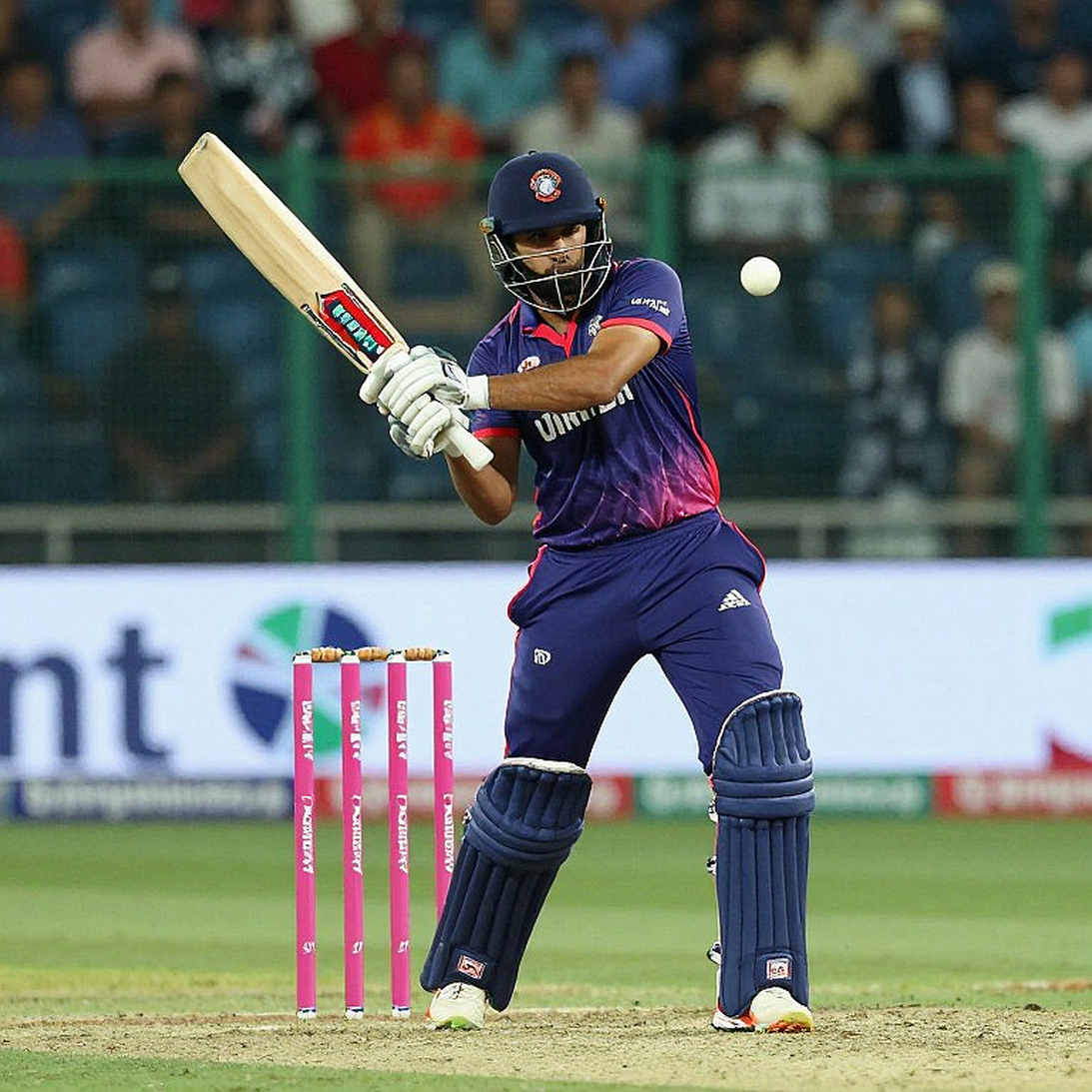
The sharpest fault line is format. Test cricket, one-day cricket and T20 speak different mathematical languages. A strike rate in the low 50s is a solid start for a Test opener, because time and wickets are the priority there. The same strike rate in T20 can be a liability, because every ball carries a premium. Conversely, a strike rate of 140 is respectable for a T20 finisher and rare aggression in a Test. The same logic applies to bowling. An economy rate of 5.5 to 6.0 is good in ODI cricket, while in T20 anything under 8.0 is useful and under 7.0 is excellent. An analyst who judges a T20 bowler by ODI yardsticks can turn an ordinary operator into a sensation — and the reverse is just as true.
No innings is generic. In T20 the first six overs are the powerplay, when only two fielders may stand outside the circle and batters are allowed to settle in. Overs seven to fifteen are the middle overs, where spinners dominate and scoring slows. Overs sixteen to twenty are the death overs, where every ball carries risk and the finisher is tested. In ODIs the powerplay lasts ten overs and the final ten overs return to aggression. In Tests the division changes completely — the first hour against the new ball, a surface roughening for spinners by days three and four, and the psychological weight of a fourth-innings chase. The same player can look entirely different across these three scenarios, and no assessment is possible without accounting for that.
Home advantage is cricket's largest structural variable, and it is often buried inside aggregate numbers. Making a big score on slow, spin-friendly subcontinental pitches and facing a seam attack on a green English surface demand different skills. A batter's average remains incomplete until we know how much of it was built at home. The same holds for bowlers: a fast bowler who takes wickets on helpful home pitches may be far less effective abroad. Weather matters just as much. In evening matches, dew makes the ball slippery, blunting the spinners and making batting easier in the second innings.
Rain and the Duckworth-Lewis-Stern (DLS) method are the clearest illustration of the context problem. DLS sets a revised target based on overs and wickets available, not runs alone. A side that has scored quickly before rain can suddenly face a raised target afterwards. The answer to 'who played better' then comes from circumstance, not from the scorecard. The toss works the same way — its value shifts with format and venue, sometimes favouring bowling first and sometimes favouring a chase.
A player cannot be evaluated without fixing his role. Opener, anchor, finisher, all-rounder, fast bowler, spinner and wicketkeeper all carry different yardsticks. An anchor exists to give the innings stability, so a modest strike rate can still be valuable provided he bats deep. A finisher exists to accelerate at the back end, so his average can be low while his strike rate must stay high. A spinner's economy rate and strike rate carry different weight depending on format. Recent form, injury history and age must also be layered in. A fast bowler past thirty has a different workload capacity, and judging him without knowing that is judging half a bowler.
The small-sample trap is the most common error in cricket analysis. Two fifties in three innings can brand a young player 'the next superstar', while the next ten innings may bring a struggle. Weather, pitch, opposition bowling and plain luck all move together in cricket. Before reaching a conclusion, at least twelve months of record across varied conditions should be examined.
At team level, ICC rankings are format-specific. Test, ODI and T20 tables are separate, and calling a side 'number one' without naming the format is incomplete information. The World Test Championship exists only for Test cricket and cannot be linked to limited-overs results. Batting depth, bowling balance, bench strength and age structure together determine how a side will hold up across a long series. Listing star names is not analysis.
League economics is a different world. The Indian Premier League is the most valuable cricket league in the game, and its broadcast rights for the 2026-27 cycle sold for roughly 48,000 crore rupees. The Big Bash League, Pakistan Super League, Caribbean Premier League, SA20, International League T20 and Major League Cricket together form a global league system. Tellingly, several leagues share owners, so capital and players move within a single network. That puts pressure on national-team calendars and raises workload questions.
Auctions and contracts also demand context. A large bid does not automatically mean a player is equally valuable on the field — sometimes the demand reflects a local young star, sometimes a shortage of all-rounders, sometimes panic bidding. The IPL's Right to Match rule lets a previous franchise match the top bid, which can open a gap between price and actual role. Playing in an overseas league requires a board-issued No Objection Certificate, and the NOC itself has often become the centre of a dispute.
On governance, the ICC's revenue-sharing arrangement has long been contested. The 'Big Three' structure introduced in 2026 gave India, Australia and England a larger share; it was later revised, but India's financial dominance has persisted. Playing rules have generated their own controversies — the use of DLS, the DRS umpire's-call provision, and slow over-rate penalties. These rules can directly change results, so they should not be dismissed as technical detail.
Integrity is the most sensitive front. Hansie Cronje's match-fixing scandal in 2026, the 2026 spot-fixing episode and the 2026 IPL spot-fixing case all show that the threat of corruption in cricket has never fully disappeared. The ICC's Anti-Corruption Unit keeps watch, but any comment on a specific incident requires solid evidence. Silence should not be read as proof that nothing was wrong.
The risk list is long — player injury and workload, the retirement cliff facing senior players, broadcast-rights renewals, the financial fragility of smaller boards, weather disruption and geopolitics. None of these arrives alone; one injury can upset a team's balance, while one political tension can cancel a bilateral series. India and Pakistan have not played a bilateral series since 2026-13, a reminder of how tightly sport and politics are woven together.
The gap between public narrative and reality matters too. The Indian market's star-making machinery turns a single innings into an epic, and much of the media follows that rhythm. Expectations then outrun the data. A young player is stamped 'the next Sachin', and every subsequent failure is framed as a crisis. The cycle harms the player and misleads the audience.
At industry level the transmission is clear — from youth development and talent supply, to national teams and leagues, to broadcast, advertising and derivative markets. India contributes the largest share of global cricket revenue, and IPL owners' expansion into SA20, MLC and ILT20 signals that capital is now moving across borders. Cricket's inclusion in the T20 format at the 2028 Los Angeles Olympics will open a new market and shape the next decade's calendar.
The takeaway is that covering cricket today is not simply reporting a score. It means reporting the format in which the score was made, the pitch it was made on, the opponent it was made against, the phase it was made in and the pressure it was made under. Three questions serve readers best: which format does this number belong to? What is its comparative benchmark? How reliable is the source? A report that answers those three is analysis; one that does not is merely noise.
संबंधित खिलाड़ी
अनुशंसित
The Null Payload: When Cricket Analysis Came Back Without a Single Receipt2026-11-01
Antum Naqvi Set for Zimbabwe Test Debut, but the Real Examination Lies Beyond the Numbers2026-11-05
USA Cricket's Bankruptcy Exit Plan: New Independent Directors, Increased ACE Funding2026-11-06
Iyer after Eden Park drubbing: “It's a learning curve, we are still adapting to New Zealand conditions”2026-10-31
Josh Tongue Ruled Out of Australia ODI Series as England Reassess Their Bowling Plans in Perth2026-11-08
Jemimah Rodrigues' Return: A Deep Look at the Indian Batter's Comeback Plan After a Lengthy Injury Layoff2026-11-01
अनुशंसित
Christchurch's 226 Chase: Dhir's 42* Ended the Innings, Wicket-Pressure Won the Match2026-10-24
Lily Bassingthwaighte's New-Ball Burst Powers Brisbane Heat to Second Straight WBBL Victory2026-11-08
The Umpire's Call Ledger: How Half a Ball Decides a Match2026-10-29
Zero-Payload: When Cricket Analysis Has Nothing to Analyze2026-10-28
From a Dubai Final to an Abu Dhabi Draft: How Cricket Learned to Change Time Zones2026-11-01
0.4 Seconds, Two Catches and 'Boothill': How James Taylor Put Short Leg's Unrecorded Craft on the Ledger2026-11-05